
 English
 Español
 Deutsch
Chat on WhatsApp
+1 (617) 987-7432
When you are sourcing flexible packaging, choosing a pouch is rarely just a matter of picking a shape from a product list.
Before we start production, we usually need to understand what you are packing, how much each package needs to hold, how the package will be filled, what size you need, what material structure is appropriate, and what you expect from the finished package.
These details affect the packaging structure we recommend and the way we approach the project.
That is why we prefer to discuss the actual packaging requirement first rather than simply recommend a pouch based on its appearance.
The first questions we ask are usually straightforward.
What product are you packing?
What is the target fill weight?
What pouch size do you need?
How will the pouch be filled?
What quantity are you planning to order?
Where will the packaging be sold?
We ask these questions because a pouch that looks suitable in a product catalogue may not necessarily be suitable for the actual filling process or product.
For an existing packaging project, we can also work from your current pouch, drawings, dimensions, artwork, or samples.
The more information we have at the beginning, the easier it is to discuss the appropriate structure.
We manufacture several types of preformed pouches, including stand up pouches, flat bottom pouches, spout pouches, side gusset pouches, shaped pouches, back central sealing pouches, and 3-side sealed pouches.
Each format has its own construction and application considerations.
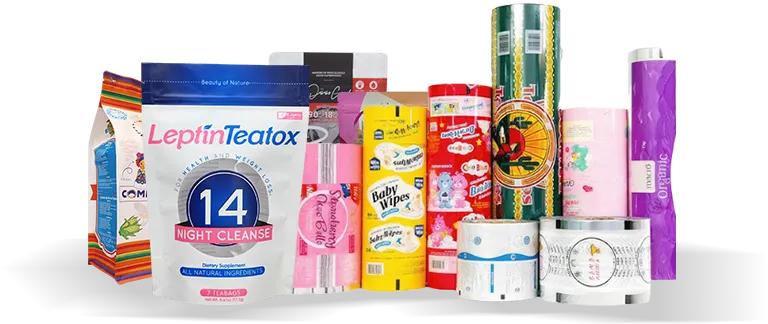
Stand up pouches are widely used for products that need an upright package on the shelf.
When we discuss a stand up pouch project, we normally look beyond the pouch shape itself. Fill weight, dimensions, opening or closure requirements, material structure and the filling process all need to be considered.
Flat bottom pouches offer a different package structure and can be considered when the package needs a stable base and a particular shelf presentation.
For these projects, we need to confirm the required dimensions, filling volume, material structure, and functional requirements before finalizing the construction.
Spout pouches are used when the product needs to be dispensed through a spout.
The pouch and spout need to work together, so we need to consider the product, filling process, required capacity, and dispensing requirements when discussing the design.
Side gusset and sealing configurations provide additional options when a standard pouch does not match the product or packaging requirements.
For a custom project, we normally review the dimensions, structure, printing, functional features, and filling method together instead of making the decision based on one factor.
Material selection is one of the areas where we spend considerable time with customers.
There is no single material structure that works for every flexible packaging application.
The right choice depends on the product, required protection, sealing requirements, packaging process, intended market, and other project conditions.
Our packaging range includes recyclable PE packaging, PP packaging, and PCR material options, as well as other flexible packaging structures for applications that require different performance characteristics.
When a customer is considering PE-based recyclable packaging, we look at the requirements of the actual package rather than treating recyclability as the only selection criterion.
The product, pouch format, sealing requirements, and intended use all need to be considered together.
PP is another material option we discuss for suitable packaging projects.
The decision depends on the specific application and the structure required for the finished package. We therefore prefer to confirm the product and packaging requirements before recommending a material structure.
PCR materials can be considered when recycled content is part of the packaging requirement.
For these projects, we need to understand the customer's packaging objectives and the required structure before determining what can be used.
We avoid treating PCR or recyclable packaging as a simple replacement for every existing structure. The actual packaging requirement still comes first.
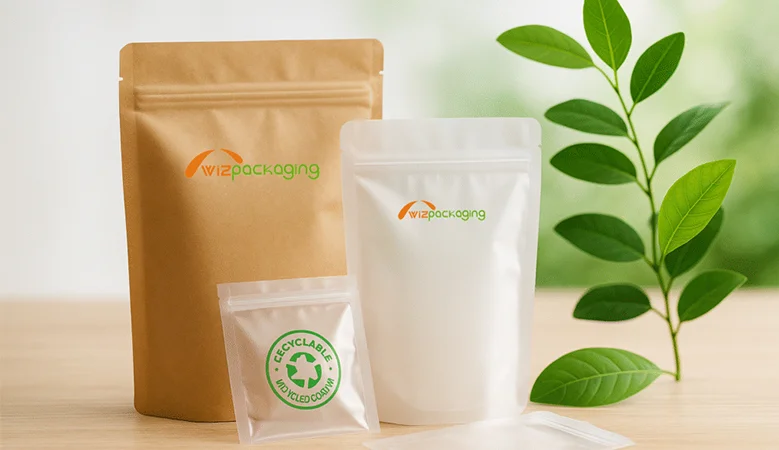
Printing is an important part of flexible packaging, but it is only one part of the production process.
Our printing capabilities include 10-color and above satellite flexographic printing presses. We also state a registration accuracy of ≤0.1 mm for our printing process.
When we discuss printing with customers, we look at the artwork and the finished package together.
The discussion may include:
Number of colors
Artwork layout
Brand colors
Fine details
Registration requirements
Printing area
Final pouch dimensions
This is particularly important when the packaging carries detailed graphics or brand elements that need to remain consistent across the finished pouches.
We prefer to review the artwork requirements before production rather than treating printing as a separate step after the pouch structure has already been decided.
Lamination is another part of the packaging construction that needs to be considered together with the material structure.
Our manufacturing process includes dry lamination and solvent-free lamination.
For each project, the important question is not simply which lamination process we have available.
We need to understand the material combination, the intended packaging application, and the performance requirements of the finished structure.
This is particularly important when we are discussing different material combinations or recyclable packaging options.
A packaging specification can look complete on paper but still leave important questions unanswered.
For example, two customers may both request a stand up pouch, but their actual requirements can be very different.
One may need a particular fill weight and pouch size for dry food.
Another may need a spout pouch for a liquid product.
A pet food customer may have different requirements from a nutritional supplement customer.
A cosmetics project may place more emphasis on package appearance and functional details.
This is why we ask about the product and filling process before confirming the packaging structure.
We work with packaging requirements across several application areas, including food, pet food and treats, drinks and tea, nutritional supplements, garments and accessories, cosmetics and household products, and agricultural products.
The packaging format can vary from one application to another.
For example, a pet food project may require a pouch structure suited to the product's fill weight and packaging process.
A tea or beverage project may require a different combination of pouch format and material structure.
For agricultural products, package strength and the actual product requirements may become more important considerations.
We therefore do not treat an industry name as a complete packaging specification.
We use it as a starting point for understanding the product and the way the package will be used.
If you are contacting us for a new packaging project, there is no need to have every technical detail finalized before the first conversation.
However, several basic pieces of information are helpful.
Tell us what you are packing and, where relevant, provide basic product information.
Let us know how much product each pouch needs to hold.
If you already have the required dimensions, send them to us. If you are replacing an existing package, the current pouch or dimensions can also be useful.
Tell us how the pouches will be filled.
If you already use a filling machine, information about the equipment can help us understand the packaging requirements.
Provide the expected quantity or purchasing plan so that we can discuss the project on the right scale.
Let us know where the packaging will be used or sold.
If the artwork is ready, we can review the printing requirements as part of the packaging discussion.
If some of these details are not available yet, we can start with the information you already have and work through the remaining requirements during the project discussion.
Our custom packaging projects normally develop through several stages.
We first understand the product and packaging requirements.
Then we discuss the pouch format, dimensions, and material structure.
If printing is required, we review the artwork and printing requirements.
For projects involving functional features, we also confirm the required components and construction.
Samples may then be reviewed before moving forward with production.
This process gives us an opportunity to identify problems before the final order rather than waiting until production has started.
It also gives the customer a clearer understanding of what will be produced.
A common mistake in packaging selection is focusing on only one specification.
For example, a buyer may start with:
“We need a recyclable pouch.”
That is useful information, but it is not enough to determine the final packaging structure.
We also need to know:
What product will be packed?
What is the fill weight?
What pouch format is required?
What dimensions are needed?
How will the pouch be filled?
What printing is required?
What functional features are needed?
What quantity is expected?
The same applies to requests such as “high barrier pouch,” “custom pouch,” or “flat bottom pouch.”
The product requirement and the manufacturing process still need to be considered before we finalize the structure.
Our approach is simple.
We do not want to make the packaging selection process more complicated than it needs to be.
At the same time, we do not want to reduce a packaging project to a product name and a price.
A good starting point is to understand the product, the filling process, and the required package.
From there, we can discuss:
Pouch format
Which structure fits the intended use?
Material
Which material structure needs to be considered for the application?
Printing
What artwork and printing requirements need to be met?
Lamination
How does the material construction affect the finished package?
Function
Does the package require a spout, closure, special shape or other feature?
Production
What needs to be confirmed before moving from samples to commercial production?
These are the questions that help us move a packaging project forward.
A flexible pouch may look simple after it has been produced.
The production decision behind it is not always simple.
The pouch format, material structure, printing, lamination, dimensions, filling method, and functional requirements all need to work together.
That is why we prefer to understand the complete requirements before confirming a packaging solution.
If you already have a packaging specification, we can work from it.
If you only have the product, fill weight, and general packaging requirements, we can start there as well.
The useful information to provide includes your product type, fill weight, pouch size, packing method, order quantity, and destination market.
From there, we can discuss the packaging format and structure that fit the project.
You do not need to have every technical decision completed before contacting us.
Send us the information you already have.
Tell us what you are packing, how much each package needs to hold, what pouch size you are considering, and how the package will be filled.
If you already have artwork, an existing pouch, drawings or packaging samples, those can also help us understand the project.
We can then discuss the pouch format, material structure, printing, and other requirements based on your actual application.
That is how we approach custom flexible packaging: start with the product, understand the requirements, and work through the packaging structure step by step.
Chat on WhatsApp
+1 (617) 987-7432