
 English
 Español
 Deutsch
Chat on WhatsApp
+1 (617) 987-7432
Barrier performance is often reduced to a single adjective in packaging briefs. That shortcut works until the first shelf-life failure, when the question becomes which transmission rate was too high, under what test condition, and whether the seal or the film was responsible. This guide takes the five barrier dimensions that matter in practice—moisture, oxygen, light, aroma and oil—and explains what each metric measures, how to read a data sheet, and how to specify a requirement that a supplier can evaluate and a buyer can verify.
Barrier performance is the ability of a packaging structure to limit the transmission of moisture, oxygen, light, aroma, and oil between the product and the outside environment. It is a system property: the sealant, the barrier layer, the printing substrate, the seal integrity, and the package geometry all affect the real protection the pack provides. WVTR and OTR are the two most commonly specified metrics, but they cover only moisture and oxygen, respectively.
The first question in a barrier discussion is not “what structure?” but “what is the product sensitive to, and what is the shelf-life target?” A moisture-sensitive biscuit and an oxygen-sensitive coffee bean fail for different reasons, and a structure that protects one may be unnecessary or insufficient for the other. A clear high-barrier film can protect against oxygen but not against light. A foil structure can protect against both but may conflict with a recyclability goal.
Matching the barrier dimension to the product sensitivity is the only way to avoid both under-protection and over-specification. The product brief should state the sensitivity (moisture, oxygen, light, aroma, oil) and the shelf-life target before any structure is proposed. For products in regulated categories, reviewing the application requirements for pet food and treats packaging helps confirm the contact category before the barrier discussion starts.
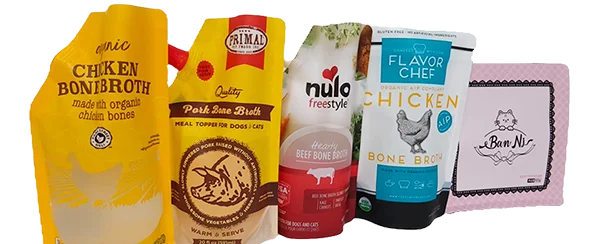
WVTR measures how much water vapor passes through a defined area of film per unit of time under specified conditions. It is typically reported in g/m²/day. The number is not comparable across suppliers unless the test condition is also stated: temperature and relative humidity on both sides of the film matter. A common condition is 38 °C and 90% relative humidity; the data sheet should state the condition explicitly, and the buyer should confirm it matches the storage environment.
WVTR is the relevant metric for products that lose quality when they absorb moisture—dry biscuits, crackers, powdered drinks, dry pet food—and for products that dry out when moisture escapes. A thicker film does not automatically have a lower WVTR; the barrier layer material matters more. A thin metallized or AlOx layer can outperform a much thicker PE layer for moisture barrier, which is why a specification that states only “PE 120 μm” may be over-specified on thickness and under-specified on actual protection. If the structure is still being compared, the layer checklist for preformed pouches is a useful cross-check before the barrier field is written.
OTR measures how much oxygen passes through a defined area of film per unit of time under specified conditions. It is often reported in cm³/m²/day/bar, with test conditions such as 23 °C and a defined relative humidity. As with WVTR, the test condition is part of the number; a data sheet that reports OTR without stating temperature and humidity is incomplete.
OTR is the relevant metric for oxygen-sensitive products—coffee, tea, nuts, some cheeses, processed meats, and many nutritional supplements—where oxidation affects color, flavor or active ingredient stability. For coffee in particular, oxygen accelerates staling, and the combination of OTR, package headspace, and valve performance determines how long the aroma profile holds. For coffee and tea applications, the drink and tea packaging page shows the format and material directions commonly used in that category.

OTR measures oxygen passing through the film from outside to inside. Residual oxygen is the oxygen already trapped inside the package after filling and sealing. They affect shelf life through different paths, and a low-OTR film does not compensate for a large headspace of air. Nitrogen flushing, vacuum, and oxygen absorbers act on the residual oxygen side; the film acts on the ingress side. A specification that states only OTR without stating the headspace treatment is incomplete. The seal side of this system is covered in the seal integrity testing methods guide, while this section only records how headspace and ingress interact.
Light barrier is not usually expressed as a single transmission number in the same way as WVTR or OTR. It is described by the opacity or light transmission of the structure, and by whether the barrier is full or partial. Aluminum foil provides essentially complete light blockage. Metallized PET reduces light transmission significantly but is not fully opaque. Opaque white film blocks light but adds a white background that affects print design. Clear high-barrier films offer oxygen or moisture barrier but limited light protection.
The choice depends on what the light does to the product. Dairy products, some oils, and certain supplements are sensitive to UV and visible light. Coffee and tea are often packed in metallized or foil structures for both light and oxygen protection, but the valve and the seal also matter. Where the visual presentation of the product through a window is important, a clear high-barrier film may be preferred even if light protection is partial, as long as the shelf-life target is met under the actual retail lighting conditions. Supplement products with light and oxygen sensitivity are reviewed on the nutritional supplement packaging page, where format and material directions for that category are described.

Aroma barrier is the ability of a structure to retain volatile flavor compounds inside the pack and to prevent external odors from entering. It is closely related to oxygen barrier for many films, but not identical: a film can be a good oxygen barrier and still allow some aroma compounds to pass. Coffee and tea are the classic cases, where aroma retention is a primary quality attribute. Pet food also depends on aroma retention to maintain palatability, and spice blends can lose their characteristic notes over time.
Odor ingress is the reverse problem: a product can absorb odors from the storage environment or from adjacent products in a mixed pallet. The seal and zipper are part of the aroma system; a perfect film with a leaking zipper will not retain aroma.
Oil resistance matters for products that contain fats or oils, including snacks, pet treats, some sauces, and cosmetic products. The concern is twofold: oil can migrate through the sealant layer and weaken the seal or cause delamination, and oil on the seal area during filling can prevent a proper seal from forming. The sealant layer selection is therefore a key oil-resistance decision, not just the barrier layer.
If the product has free oil on the surface or releases oil during storage, the brief should state this so the supplier can recommend a sealant with appropriate resistance and consider the filling residue risk.
The table below maps product sensitivity to the barrier dimension that should be specified and the typical structure direction. It is a starting point for discussion, not a substitute for application testing.
| Product sensitivity | Primary metric | Typical structure direction | What to test |
|---|---|---|---|
| Moisture loss or gain | WVTR | Metallized PET, AlOx-PET, PE/EVOH, foil | WVTR at stated condition; seal integrity |
| Oxygen oxidation | OTR | Alu foil, AlOx-PET, EVOH, high-barrier mono | OTR at stated condition; headspace oxygen |
| Light degradation | Light transmission/opacity | Alu foil, opaque white, metallized PET | Light transmission or opacity; shelf-life under retail light |
| Aroma loss or odor ingress | Aroma barrier (often linked to OTR) | Alu foil, high-barrier composite | Sensory panel or aroma compound analysis; seal/zipper performance |
| Oil migration or seal contamination | Sealant compatibility; oil resistance | Oil-resistant sealant; appropriate barrier layer | Seal strength after oil contact; migration test |
A composite structure such as PET/AL/PE may satisfy several dimensions at once, but it is not the default answer for every product. A mono-material recyclable structure may meet a moisture barrier target for a dry product while falling short on oxygen or light. The matrix helps the buyer state which dimensions are critical, so the supplier can propose a structure that meets those dimensions without adding cost for properties the product does not need. If recyclability is part of the brief, the mono-material and PCR material routes page explains how those structures trade off against barrier performance.
The film data sheet describes the film, not the package. Four factors change the real barrier performance of a finished pouch:
A supplier data sheet is a screening tool, not a verification. Three checks should be completed before a barrier claim is accepted:
Supplier datasheet vs third-party test report. A supplier data sheet is generated from the supplier’s own testing or from a film manufacturer’s data. It is useful for comparing candidate structures, but it is not independent verification. A third-party test report from an accredited laboratory carries more weight, particularly when the buyer’s customer or regulator requires documented evidence. The report should state the laboratory, the test method, the sample condition, and the test condition. If a third-party report is not available, the buyer should ask why and decide whether a pilot test is sufficient for the project.
Test condition matches the use case. WVTR at 38 °C/90% RH is not the same as WVTR at 23 °C/50% RH. If the data sheet does not state the condition, ask for it. If the condition does not match the storage environment, the number may not predict real shelf life.
Pilot shelf-life test before commercial production. Film data is a screening tool. The actual product in the actual pouch under actual storage conditions is the only way to confirm that the barrier meets the shelf-life target. Accelerated conditions can provide an early signal, but the correlation to real-time shelf life should be understood before the result is relied on.
WVTR measures water vapor transmission and is relevant for moisture-sensitive products. OTR measures oxygen transmission and is relevant for oxygen-sensitive products. They are separate metrics, and a film can be good at one and poor at the other.
It depends on the product sensitivity. A dry crisp product is usually moisture-sensitive and needs WVTR. Coffee or nuts are usually oxygen-sensitive and need OTR. Many products need both, and the shelf-life target and storage conditions should guide the choice.
Metallized film provides a good barrier at lower cost and weight, but it is not fully opaque, and the barrier can be affected by flexing. Aluminum foil provides an essentially complete light and moisture barrier and is more robust, but it is not recyclable in most mono-material streams. The choice depends on the shelf-life target, product sensitivity, and sustainability requirements.
Mono-PE structures can achieve a useful moisture barrier, and with EVOH or AlOx layers they can improve the oxygen barrier. The achievable barrier depends on the specific structure and the product requirement. A mono-material solution should be evaluated against the actual shelf-life target, not against a general “high barrier” claim.
The shelf-life target comes from the product and the market: how long the product must remain acceptable under the expected storage and distribution conditions. It is not a packaging decision alone. Once the target is set, the supplier can propose a structure and a test plan.
Ask for the temperature and relative humidity on both sides of the film, the test method, and the sample preparation. A number without the condition is not comparable. The condition should match, or be justifiable against, the actual storage and distribution environment.
Clear high-barrier films offer oxygen or moisture barrier but limited light protection. If the product is light-sensitive, an opaque or metallized structure should be evaluated, or the shelf-life target should be confirmed under the actual retail lighting conditions.
Barrier performance is not a single number or a single layer. It is the match between the product’s sensitivity, the film structure, the seal and closure system, the package geometry and the storage environment. WVTR and OTR are the two most commonly specified metrics, but light, aroma, and oil resistance also matter for many products.
The practical approach is to state the sensitivity and the shelf-life target first, ask the supplier to propose a structure with test data at a stated condition, and verify with a pilot shelf-life test before commercial production. If a structure is described as “high barrier” without a number or condition, ask for the missing information. The right barrier is the one that protects the product for the required time without adding cost or material complexity the product does not need.
To review the formats and material routes discussed here in more detail, the custom pouch formats and the sustainable material options are the natural next stops.
Chat on WhatsApp
+1 (617) 987-7432