
 English
 Español
 Deutsch
Chat on WhatsApp
+1 (617) 987-7432
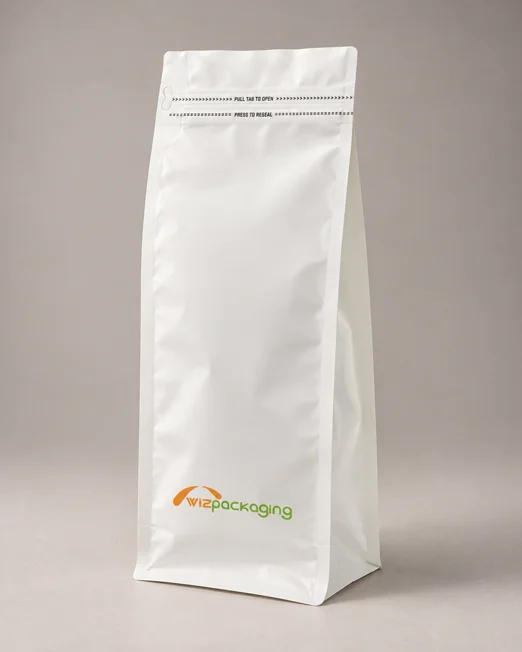
A PE/PE packaging sample from Wiz Packaging
A PE/PE packaging sample from Wiz Packaging. A PE/PE pouch combines polyethylene- based films with practical features for filling, opening, and handling. For brands considering mono- material packaging, a finished sample helps connect material choices with the way a pouch will actually be used.
This PE/PE sample from Wiz Packaging features a pull- tab opening, a press- to- reseal closure, and gusseted construction. Here is what its design can tell packaging buyers, and what to check before choosing a similar pouch.
PE stands for polyethylene. In a PE/PE laminate, the main outer and inner films belong to the PE family, although their grades and functions can differ. The outer film supports printing and handling, while the inner film provides the heat- sealing surface.
Mono- material does not necessarily mean a single layer. Films may contain multiple layers, and the complete pouch can include adhesive, inks, and a closure. Our PE recyclable packaging options explain the broader material choices.
The pull- tab opening gives users a clear starting point for opening the pouch. The press- to- reseal feature allows it to be closed between uses. When assessing a similar design, check opening access and how easily the closure engages with the actual product inside. Reclosing should not be assumed to restore the original sealed pack's barrier performance.
Side and bottom gussets give the pouch room to expand. Usable capacity depends on product volume, headspace, and closure position, rather than empty dimensions alone. For shelf presentation, compare filled shape and standing stability; our flat bottom pouch options offer a useful format reference.
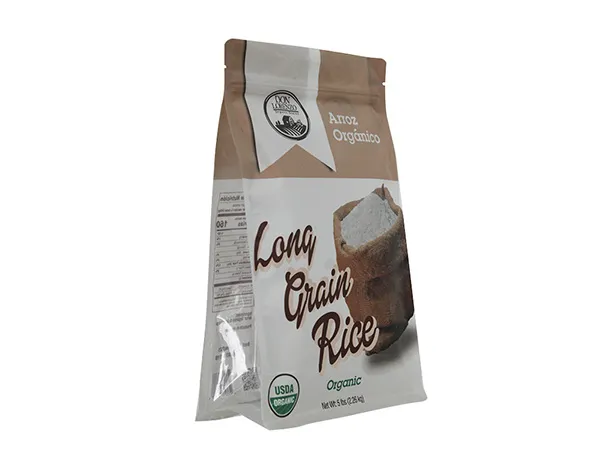
The white, flexible film and heat- sealed edges complete the sample. When reviewing seals, include corners and folded sections where the number of film layers changes, as well as straight edges.
A PET/PE laminate uses polyester as the outer film and polyethylene as the sealing film. Moving to PE/PE changes the material combination, so the new pouch should be compared with the current pack for printing, stiffness, product protection, and filling performance.
Trial the selected structure on the intended equipment. Review pouch feeding, opening and sealing temperature, pressure, and dwell time. A smooth- looking seal alone does not establish leak resistance; assess representative filled packs under the handling and transport conditions they will face.
Seal- strength tests and leak checks answer different questions: how firmly a seal holds and whether a leakage path exists. When changing materials, agree with your supplier on the acceptance criteria before sampling. This makes the comparison more useful than judging an empty pouch by appearance or feel alone.
PE/PE is not a universal high- barrier specification. A basic PE structure and a PE- based structure containing a dedicated oxygen- barrier layer can perform differently. For oxygen- sensitive products, PE/EVOH/PE is one option to discuss with the supplier; it is not a performance claim for the sample shown here.
Provide the product type, target shelf life, storage conditions, and filling process. Where relevant, request oxygen transmission rate (OTR) and water vapor transmission rate (WVTR) data with test conditions and units. Use these results alongside filled- package and shelf- life validation. Food applications also require appropriate documentation for the final structure and intended contact conditions.
Keeping the main films within the PE family can support design for PE recycling. Actual recyclability depends on the complete construction and local collection, sorting and recycling systems.
Closures, inks, adhesives, labels and barrier layers all matter. The RecyClass guidelines for PE flexible packaging illustrate why these components must be reviewed together. PE/PE alone is not a recycling certification, and it does not automatically mean the pouch contains recycled material.
Wiz Packaging works with PE- based structures, including PE/PE and PE/EVOH/PE. This sample offers a starting point for discussing material selection, opening features, and pouch format.
To begin, share your product and fill weight, target shelf life, destination market, filling method, preferred dimensions, and estimated order quantity. If available, include your current packaging specification so the proposed design can be compared against it.
Contact Wiz Packaging about your PE pouch project to discuss material options and the next steps for sampling.
Chat on WhatsApp
+1 (617) 987-7432