
 English
 Español
 Deutsch
Chat on WhatsApp
+1 (617) 987-7432
Seal integrity testing verifies whether a flexible package maintains a reliable closure through filling, storage, transport, and retail handling. The three most widely referenced test categories are seal strength testing (ASTM F88), leak detection (burst test per ASTM F1140, vacuum decay per ASTM F2338, dye penetration per ASTM F1929), and visual inspection (ASTM F1886). The right test method depends on your product type, pouch format, filling process, and shelf-life target. Buyers should agree on test methods, sampling frequency, and acceptance criteria with their supplier before mass production.
Seal failure is among the most frequently reported quality issues in flexible packaging. Unlike print defects or dimension errors — which are visible on the surface — a weak seal or a channel leak may not be apparent until the product reaches the consumer. By then, the cost is measured in returns, complaints, and damaged brand trust.
This guide is written for packaging buyers, product managers, and quality engineers who need to specify, verify, and communicate seal integrity requirements. It covers the standard test methods referenced in the flexible packaging industry, the operating parameters that affect seal performance, and a practical checklist for engaging with suppliers.
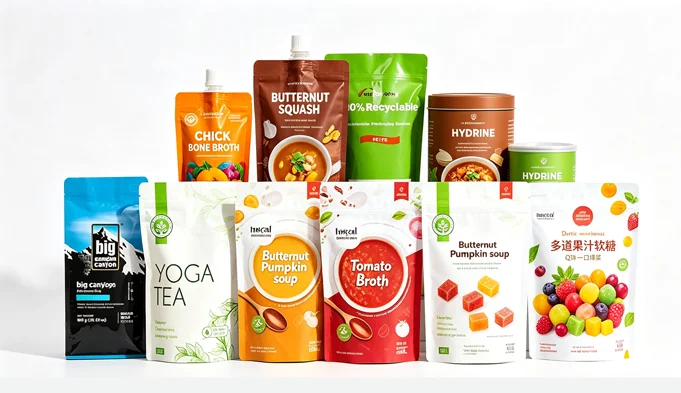
A flexible package seal performs two functions: it holds the package closed under mechanical stress, and it maintains a barrier against moisture, oxygen, and contaminants. A seal that is strong but has a microscopic channel leak will pass a peel test but fail in the field. A seal that is leak-tight but weakly bonded may burst during shipping.
Different product categories carry different risk profiles:
The test methods described below address these risks from different angles. No single test covers every failure mode — a practical quality program combines multiple methods.
ASTM F88/F88M is the standard test method for measuring the strength of seals in flexible barrier materials. It covers the measurement of the strength of seals in flexible barrier materials, including seals between a flexible material and another flexible material, a rigid material, or a semi-rigid material. The test measures the force required to separate a test strip of material containing the seal and also identifies the mode of specimen failure. It is the most widely used quantitative seal test in the industry.
How it works: A strip of sealed material is cut from the pouch. The two layers are separated at the seal and pulled apart using a tensile testing machine at a controlled rate. The peak force required to separate the seal is recorded.
What it tells you: Seal strength testing quantifies the bond between the sealing layers. It helps identify whether the heat seal parameters — temperature, pressure, and dwell time — are producing a consistent bond across the seal area.
Acceptance criteria: ASTM F88 does not specify a minimum or maximum seal strength value. The appropriate target is determined by the buyer and supplier based on the material structure, pouch format, fill weight, and end-use conditions. It should be verified through testing on production samples. Buyers should confirm the specification with their supplier before mass production.
Limitations: ASTM F88 measures strength, not leak-tightness. A pouch can have high peel strength yet still contain a channel leak at a triple point or gusset transition. Seal strength testing should be combined with a leak detection method.
ASTM F1140 covers test methods for determining the ability of packages to withstand internal pressurization. The burst test increasingly pressurizes the package until the package fails, while the creep test maintains a specified pressure for a specified time or until the package fails.
How it works: The package is connected to a controlled air supply and inflated until the seal ruptures or the package bursts. The peak pressure is recorded.
What it tells you: The burst test evaluates the overall structural integrity of the seal and the package as a system. It is particularly useful for pouches with complex geometries — flat bottom, side gusset — where seals intersect at multiple angles.
ASTM F2054 is a related standard specifically for burst testing of flexible package seals using internal air pressurization within restraining plates. This method is functionally similar to F1140 but places the package within restraining plates to maintain dimensional stability during pressurization, resulting in stresses applied more uniformly along the perimeter of the package where seals are normally placed. This allows the test to have a higher probability of detecting the weakest area of the seal.
The vacuum decay method places the package in a sealed chamber, draws a vacuum, and monitors the pressure change over time. A pressure rise indicates air entering the package through a leak.
What it tells you: Vacuum decay is a non-destructive, quantitative method. For rigid, nonporous packages, hole defects of at least 5 μm in diameter can be detected at a target vacuum of 5·10⁴ Pa (500 mbar) using a differential pressure transducer test instrument. For flexible, nonporous packages, the method is also applicable, though sensitivity data for flexible packages were not included in the precision and bias studies.
Advantages: Non-destructive, repeatable, and suitable for automated inspection. The package remains intact and can be returned to the production stream if it passes.
Limitations: Requires a vacuum chamber sized to the package. Very large pouches may not fit standard equipment. The method is less effective for packages containing liquids or products with high headspace.
ASTM F1929 defines materials and procedures to detect and locate a leak equal to or greater than a channel formed by a 50 µm (0.002 in.) wire in package edge seals formed between a transparent material and a porous sheet material.
How it works: A dye penetrant solution is applied locally to the seal edge. After contact with the dye penetrant for a specified time, the package is visually inspected for dye penetration. Three dye application methods are covered: injection, edge dip, and eyedropper.
What it tells you: Dye penetration is a visual, relatively low-cost method for locating leaks. It is particularly useful for identifying channel leaks at seal edges and triple points.
Limitations: Destructive, operator-dependent, and less quantitative than vacuum decay. Best suited for sample-based verification rather than 100% inspection.
ASTM F1886/F1886M covers the determination of channels in the package seal down to a width of 75 μm (0.003 in.) with a 60–100% probability. The ability to visually detect channel defects is highly dependent on the size of the channel, the degree of contrast from sealed and unsealed areas, the amount and type of adhesive between the two package layers, the light angle, the types of material used, the use of magnification, and the inspector’s level of training and experience.
What to look for:
| Defect Type | What to Check |
|---|---|
| Seal defects | Channels, wrinkles, uneven seal width, contamination in seal area |
| Surface defects | Scratches, scuffing, ink rubbing, foreign particles |
| Structural defects | Deformation, uneven gussets, incorrect pouch shape |
Visual inspection is the first line of defense and should be performed on every production run. Under standardized lighting, inspectors should check multiple samples from the same batch. A clean seal appearance is not proof of integrity — visual inspection can only detect what is visible. Confirmed defects should trigger additional testing.
The sealing layer is the innermost film layer that melts and bonds during heat sealing. Common sealing layer materials include:
The outer and barrier layers also influence seal performance indirectly. A thicker barrier layer — such as aluminum foil — can affect heat transfer to the sealing layer, requiring higher seal bar temperatures or longer dwell times. A stiffer outer substrate — BOPET versus BOPA — changes how the seal area behaves under tension. Review the available material structures and barrier options to understand how layer selection affects sealing performance.

Three variables control the heat sealing process:
Temperature: The seal bar temperature must be high enough to melt the sealing layer but not so high that it causes seal thinning or film deformation. The optimal range depends on the sealing layer material — LDPE typically seals lower than CPP.
Pressure: Uniform pressure across the seal bar ensures the molten polymer flows together evenly. Insufficient pressure creates weak bonds; excessive pressure can squeeze the sealant layer too thin.
Dwell time: The contact time between the seal bar and the film. The appropriate dwell time depends on the sealing layer material, film thickness, and sealing equipment. It should be established through sealing trials and verified through seal strength and leak testing.
These three variables interact. A higher temperature may compensate for a shorter dwell time, but excessive temperature can cause seal contamination to carbonize or create pinholes. Buyers should discuss sealing conditions with their supplier and confirm that the recommended parameters match their filling equipment.
Seal contamination — product particles, powder, oil, or moisture trapped in the seal area during filling — is a leading cause of channel leaks. Contamination prevents the sealing layers from making full contact, creating micro-channels that allow air and moisture to pass.
Common contamination sources include:
Prevention approaches:
If your product is prone to seal contamination, discuss this with your packaging supplier during the sampling stage. A sealant formulation designed for contamination tolerance may be available.
| Product Type | Priority Test Methods | Key Considerations |
|---|---|---|
| Dry snacks/powders | ASTM F88, vacuum decay, visual | Moisture ingress is primary risk; check seal for powder contamination |
| Coffee/tea | ASTM F88, burst test, visual | Aroma retention and valve compatibility; check seal around valve area |
| Pet food (dry) | ASTM F88, burst test, dye penetration | Oil migration can weaken seals; heavy fill weight requires higher seal strength |
| Pet food (wet/retort) | Burst test, vacuum decay, dye penetration | Temperature extremes; verify seal after retort process |
| Liquids/sauces | Burst test, vacuum decay | Inversion and pressure resistance; spout seal is a critical point |
| Frozen products | ASTM F88 after freeze-thaw cycle, visual | Check for delamination or channel formation after temperature cycling |
| Nutritional supplements | ASTM F88, vacuum decay, visual | Moisture and oxygen sensitivity; check child-resistant closure compatibility |
This table is a starting point. The appropriate test strategy for a specific product should be developed in collaboration with the packaging supplier, based on the product’s sensitivity profile and the filling process.
There is no single industry-wide sampling frequency that applies to all flexible packaging. The appropriate frequency depends on production volume, product risk level, and regulatory requirements.
For food and pet food applications, common practice includes:
For retort and other thermally processed products, more stringent requirements may apply. Buyers should confirm the applicable requirements for their destination market.
A practical approach for buyers: agree on a sampling plan with your supplier during the quotation stage. Specify the test methods, sampling frequency, and acceptance criteria in the purchase specification. This avoids disputes later.
Use this checklist when engaging with a packaging supplier on seal integrity requirements:
This checklist can be adapted to the specific requirements of your product and destination market. For complex applications — retort, liquid, or high-barrier — involve your quality team in the specification review.
Seal integrity testing verifies that a flexible package seal is both strong enough to hold under mechanical stress and leak-tight enough to prevent moisture, oxygen, or contaminants from passing through. It includes quantitative tests — seal strength, burst pressure, vacuum decay — and qualitative checks such as visual inspection and dye penetration.
There is no single “best” method. ASTM F88 measures seal strength. Burst testing per ASTM F1140 evaluates overall package integrity under pressure. Vacuum decay per ASTM F2338 detects leaks non-destructively. Dye penetration per ASTM F1929 locates channel leaks. A practical quality program combines multiple methods based on the product type and risk level.
The appropriate frequency depends on production volume, product risk, and regulatory requirements. For food and pet food applications, visual inspection is typically performed at the start of each run and at regular intervals during production. Seal strength and leak testing are performed at the start of production and after any parameter change. Agree on a sampling plan with your supplier before mass production.
Common causes include incorrect heat seal parameters — temperature, pressure, dwell time; contamination in the seal area during filling; material incompatibility; and mechanical damage during handling or shipping. Seal failure can also occur at gusset transitions and triple points where multiple seal directions meet.
Yes. Vacuum decay per ASTM F2338 is a non-destructive method suitable for 100% inspection in some production environments. Visual inspection per ASTM F1886 is also non-destructive. Destructive methods such as ASTM F88, burst test, and dye penetration are used for sample-based verification.
Specify the material structure, including the sealing layer, the required seal strength range, the test method and acceptance criteria, the sampling frequency, and the documentation required — test reports, CoA. Include a requirement for pre-production sample testing and first-article inspection.
Seal integrity testing is not a single test — it is a system of verification methods that together confirm whether a flexible package will perform as intended. The most important step for buyers is to agree on test methods, sampling frequency, and acceptance criteria with the supplier before mass production begins.
If you are evaluating preformed pouches for a food, pet food, or liquid application, review the available preformed pouch formats and structural options to understand the seal configurations relevant to your product. For products with high barrier requirements or complex seal geometries, a discussion with the packaging engineering team during the specification stage can help identify potential seal risks early.
Chat on WhatsApp
+1 (617) 987-7432