
 English
 Español
 Deutsch
Chat on WhatsApp
+1 (617) 987-7432
Preformed pouches are ready-made flexible packaging formats supplied pre-formed and sealed on three sides, ready for filling and final sealing on your production line. Selecting the right pouch involves matching pouch format to product type and filling method, choosing a material structure that provides the required barrier protection, and understanding how printing method and accessory features affect cost and lead time. This guide walks through each decision point in the sourcing process.
Preformed pouches have become the default flexible packaging choice for many food, pet food, supplement, and household product brands. The reason is straightforward: they arrive ready to fill, require less capital equipment than rollstock-based form-fill-seal systems, and offer a broader range of formats and features than most brands can produce in-house.
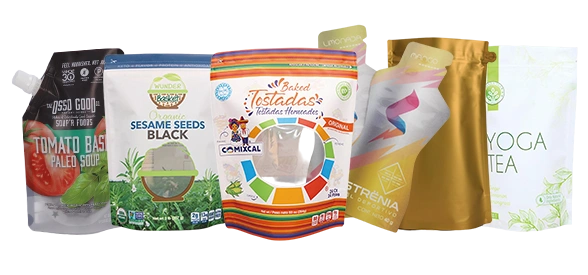
But the range of options also creates complexity. Stand-up, flat bottom, side gusset, spout, three-side seal, and shaped pouches each serve different product and channel requirements. Material structures can range from simple two-layer laminates to seven-layer high-barrier constructions. Printing methods, closure systems, and accessory features each add cost and lead time.
This guide is written for packaging buyers, product managers, and procurement teams who need to make informed decisions at each stage of the sourcing process. It covers pouch format selection, material and barrier options, printing methods, filling equipment compatibility, and cost factors — with a buyer checklist at the end.
A preformed pouch is a finished flexible package that has been printed, laminated, converted, and sealed on three sides by the packaging manufacturer. It arrives at your facility ready for filling. Your production line opens the pouch, fills it with product, and seals the final edge.
This is distinct from rollstock film, which is supplied as a continuous roll and formed into a package on your filling equipment. With preformed pouches, the converting step happens at the supplier — not on your line.
The practical implications of this difference are significant. Preformed pouches require less capital equipment, allow faster changeovers between SKUs, and support more complex pouch geometries that would be difficult to form inline. Rollstock film, by contrast, typically offers a lower per-unit material cost at high volumes and higher production speeds.
The stand-up pouch (also called a doypack) uses an expanding bottom gusset that allows the pouch to stand upright on the shelf. It is one of the most widely used flexible packaging formats, suitable for snacks, coffee, dried fruit, pet food, and powders.
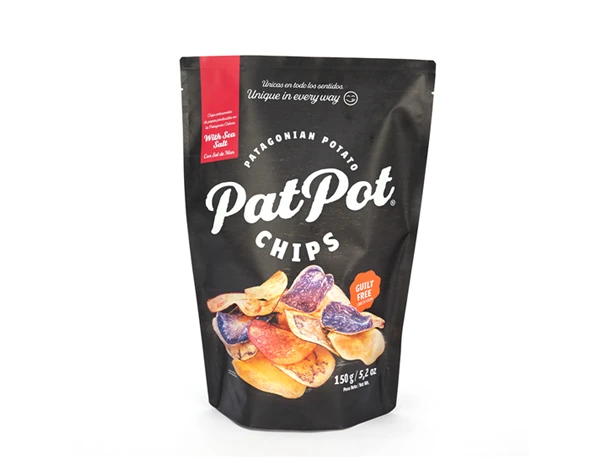
Key considerations: The bottom gusset provides shelf stability but also means the pouch requires adequate headspace and fill volume to stand properly. A stand-up pouch that is underfilled may not stand upright reliably.
The flat bottom pouch uses a box-like base with defined side panels, providing greater stability and a more structured appearance than a stand-up pouch. It typically offers five printable surfaces — front, back, and side panels — which makes it suitable for premium product positioning.
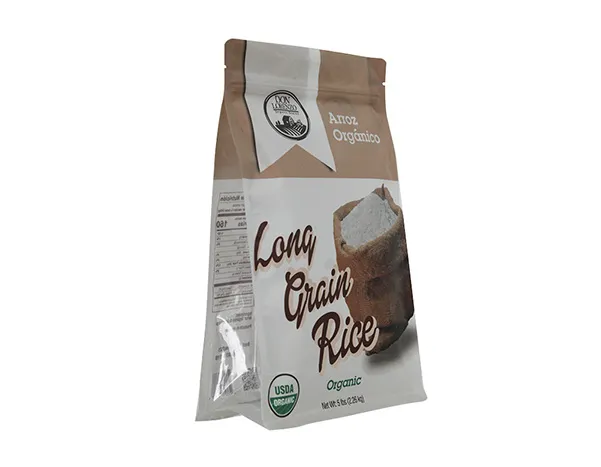
Key considerations: The more complex construction involves additional folding and sealing steps, which typically makes the flat bottom pouch more expensive than a stand-up pouch. It is best suited for products where shelf presence and branding area justify the higher cost.
A spout pouch is a flexible pouch fitted with a spout and cap that enables controlled dispensing of liquids and semi-liquids. It is widely used for sauces, purees, beverages, cosmetics, and household products.
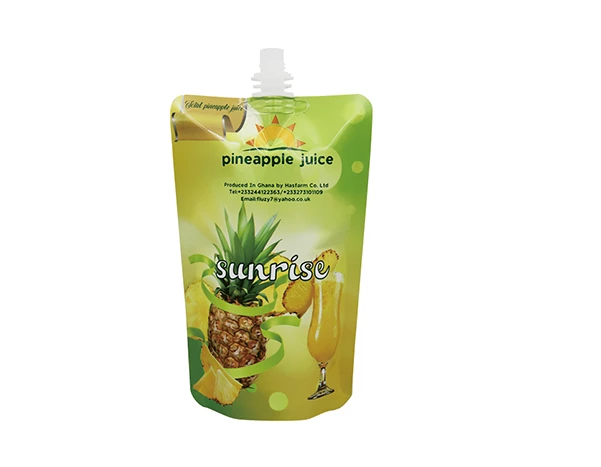
Key considerations: The spout seal is a critical quality point. Spout fitment materials must be compatible with the pouch sealing layer, and the seal must withstand pressure during filling, transport, and consumer use.
Side gusset pouches feature gussets on both sides, expanding the internal volume for high-capacity applications. They are commonly used for coffee, pet food, powders, and bulk dry goods.
.webp)
Key considerations: Side gusset pouches offer efficient internal volume relative to material use. The main seal can be positioned on the back center or on the side, and the choice affects both the appearance and the filling process.
The three-side seal pouch is a flat pouch sealed on three edges, with the fourth edge left open for filling. It uses less material than gusseted formats, runs well on standard filling equipment, and ships flat.
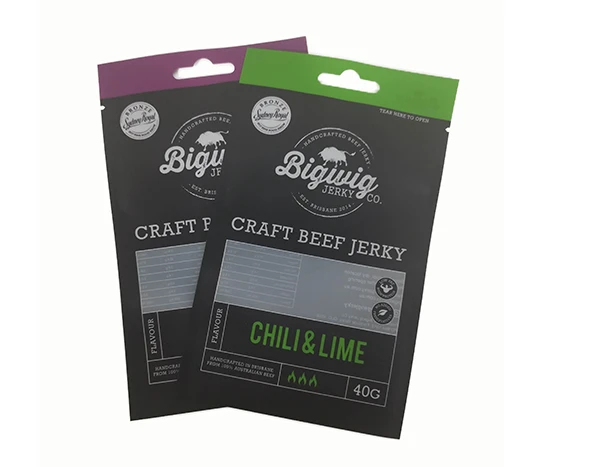
Key considerations: The flat format limits shelf-standing ability — three-side seal pouches typically lie flat or require secondary support. They are best suited for samples, single-serve portions, and compact secondary packaging.
Shaped pouches are die-cut into custom shapes that differentiate the product on the shelf. They are used for snacks, candy, pet treats, and promotional packaging.
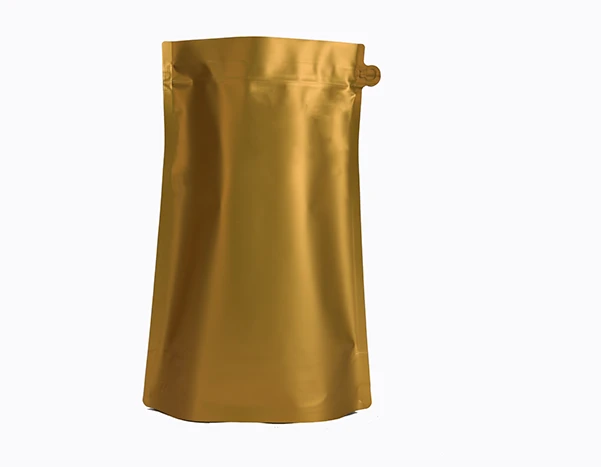
Key considerations: Custom die-cut shapes require dedicated cutting dies, which adds tooling cost and may affect production speed. The shape must maintain structural integrity when filled.
| Format | Best For | Key Trade-Off |
|---|---|---|
| Stand-up pouch | Snacks, coffee, pet food, powders | Requires adequate fill volume to stand |
| Flat bottom pouch | Premium products, coffee, pet food | Higher cost due to complex construction |
| Spout pouch | Liquids, sauces, purees, cosmetics | Spout seal integrity is critical |
| Side gusset pouch | Coffee, bulk dry goods, pet food | Closure and top-seal design affect performance |
| Three-side seal pouch | Samples, single-serve, sachets | Does not stand on shelf |
| Shaped pouch | Promotional, candy, pet treats | Tooling cost and production speed |
This comparison is a starting point. The appropriate format depends on the specific product, filling method, and distribution channel. A physical product sample allows the packaging supplier to evaluate bulk density, shape, and flow behavior — factors that influence pouch dimensions and opening size.
The material structure of a preformed pouch determines its barrier performance, sealability, and mechanical strength. Most flexible packaging structures use multiple layers, each serving a specific function.
Outer layer (print substrate): Provides the printing surface, mechanical strength, and heat resistance. Common materials include PET, BOPP, and paper.
Barrier layer: Reduces transmission of moisture, oxygen, light, and aroma. Common barrier materials include metallized PET, aluminum foil, EVOH, and PVOH.
Sealing layer (innermost): Melts during heat sealing to form the bond. Common sealing layer materials include LDPE, LLDPE, CPP, and PLA.
Barrier performance is measured by standard test methods. Two of the most widely referenced are:
| Test Standard | What It Measures | Reference |
|---|---|---|
| ASTM F1249 | Water Vapor Transmission Rate (WVTR) through plastic film and sheeting using a modulated infrared sensor | ASTM F1249-25 |
| ASTM D3985 | Oxygen Gas Transmission Rate (OTR) through plastic film and sheeting using a coulometric sensor | ASTM D3985-24 |
ASTM F1249 covers a procedure for determining the rate of water vapor transmission through flexible barrier materials. The method is applicable to sheets and films up to 3 mm (0.1 in.) in thickness.
ASTM D3985 covers the determination of oxygen gas transmission rate, the permeance of the film to oxygen gas, and the oxygen permeability coefficient. The method uses a coulometric sensor.
Buyers should request WVTR and OTR test data from their supplier for the proposed material structure, particularly for products with moisture or oxygen sensitivity.
| Product Sensitivity | Required Barrier | Suggested Structure |
|---|---|---|
| Moisture-sensitive (dry powders, snacks) | High WVTR barrier | Metallized PET or aluminum foil |
| Oxygen-sensitive (coffee, nuts, supplements) | High OTR barrier | EVOH or aluminum foil |
| Aroma-sensitive (coffee, tea) | Aroma retention | High-barrier laminate with sealing layer |
| Oil-containing (pet food, snacks) | Oil resistance | Grease-resistant sealing layer |
| Light-sensitive (supplements, dairy) | Light blocking | Metallized or opaque outer layer |
| Standard dry goods | Basic protection | Two-layer PET/PE laminate |
For applications requiring recyclable structures, mono-material PE or PP options can be evaluated. Their suitability depends on the required barrier performance, seal strength, and local recycling guidance. Review the available material structures and barrier options to understand how layer selection affects packaging performance.
The printing method affects both the visual quality and the cost structure of preformed pouches. Three main methods are used in flexible packaging:
Flexographic (flexo) printing uses flexible raised-image plates to transfer ink onto the substrate. It is well suited to medium to long runs and is increasingly used for thinner and recyclable packaging materials. Flexo becomes increasingly cost-effective for medium to long runs, where plate setup costs can be spread across higher volumes.
Rotogravure (gravure) printing engraves the design onto a cylinder. It is built for very long runs and premium image reproduction, achieving deep, rich colors and fine details. In the right conditions, gravure presses can reach speeds of up to 1,000 meters per minute.
Digital printing transfers a digital file directly to the substrate without printing plates. It is strongest for short runs, frequent artwork changes, personalization, and variable data. Digital printing avoids physical printing plates, reducing setup requirements and enabling faster changeovers.
| Order Volume | Recommended Method | Key Reason |
|---|---|---|
| Under 1,000 units | Digital | No plate cost, fast turnaround |
| 1,000–10,000 units | Digital or flexo | Depends on artwork complexity and repeat orders |
| 10,000–100,000 units | Flexo | Plate cost spread across volume |
| Over 100,000 units | Flexo or gravure | Gravure for premium image reproduction |
Printing method selection should also consider the substrate. Flexo is well established in packaging where printers need to work with a range of materials, including thinner and recyclable films. Gravure remains a trusted choice for premium packaging that demands intricate designs and perfect color reproduction.
For additional information on Wiz Packaging's printing capabilities, review the printing technology overview.
Preformed pouches can be filled manually, semi-automatically, or with automatic pouch-filling equipment. The pouch format and material stiffness must be compatible with the filling method.
Manual filling: Suitable for small batches, samples, and products with irregular shapes. The pouch opening must be wide enough for manual access.
Semi-automatic filling: Uses a pouch-filling machine that opens, fills, and seals each pouch. Suitable for medium-volume production. The pouch stiffness and opening behavior affect machine performance.
Automatic filling: High-speed rotary or linear pouch fillers that pick pouches from a magazine, open them, fill, seal, and discharge. Modern premade pouch fillers move at rates that keep most brands ahead of demand.
Key compatibility factors include:
Powders require attention to dust in the seal area. Liquids need controlled filling and dependable seals. Bulky products need a sufficiently wide opening. A pouch that performs well on the shelf can still reduce production speed if it is difficult for machinery to pick up or open.
For products requiring complex pouch geometries or accessory features, review the available preformed pouch formats and customization options.
The cost of a preformed pouch is influenced by multiple factors. Understanding these factors helps buyers evaluate quotations and identify opportunities to optimize cost without compromising performance.
Material cost: The largest component. Higher barrier structures with multiple layers or specialized materials cost more than standard two-layer laminates. The choice between a standard structure and a high-barrier structure should be based on the product's actual sensitivity and shelf-life target.
Pouch format complexity: Stand-up and flat bottom pouches require more converting steps than three-side seal pouches. Each additional fold, seal, or forming step adds cost. Flat bottom pouches are typically more expensive than stand-up pouches due to the more complex pouch-forming process.
Printing cost: Digital printing has no plate cost but higher ink cost. Flexo and gravure have plate or cylinder costs that are amortized over the order volume. For medium to long runs, flexo becomes increasingly cost-effective as plate setup costs are spread across higher volumes.
Accessory features: Zippers, spouts, valves, handles, and tear notches each add material cost and production complexity. Features should solve a clear packaging need rather than be added only for appearance.
Order quantity: Most suppliers set minimum order quantities (MOQs) by SKU. Larger orders typically receive lower per-unit pricing. The MOQ may vary by pouch style — a spouted or shaped pouch runs differently than a standard stand-up pouch.
The cost comparison between preformed pouches and rollstock film is not a simple per-unit comparison. It involves multiple factors:
| Cost Factor | Preformed Pouches | Rollstock Film |
|---|---|---|
| Per-unit material cost | Higher (includes converting) | Lower (film only) |
| Equipment investment | Lower (pouch filler) | Higher (VFFS/HFFS machine) |
| Changeover time | Faster | Slower |
| Suitable volume | Small to medium | Medium to high |
| Pouch format range | Broad (complex shapes) | Limited (simple formats) |
Rollstock film is typically up to 30–50% cheaper than premade pouches on a per-unit material basis. However, rollstock requires higher upfront equipment investment and is best suited for companies confident in long product runs and long-term volume growth.
The right choice depends on volume projections, equipment availability, and the importance of pouch format flexibility. For buyers evaluating both options, a total cost of ownership analysis — including equipment, labor, changeover time, and material waste — provides a more accurate comparison than per-unit price alone.
Use this checklist when specifying preformed pouches:
Product Requirements
Pouch Format
Material Structure
Printing
Filling and Sealing
Order Planning
Preformed pouches are ready-made flexible packaging formats supplied pre-formed and sealed on three sides. They arrive at your facility ready for filling and final sealing, without requiring inline pouch-forming equipment.
There is no single best format. Stand-up pouches are versatile for snacks, coffee, and powders. Flat bottom pouches suit premium products requiring shelf presence. Spout pouches are designed for liquids and semi-liquids. Three-side seal pouches work well for samples and single-serve portions. The right format depends on your product type, fill weight, filling method, and channel requirements.
Material selection starts with the product's sensitivity to moisture, oxygen, light, and aroma. The required shelf life, distribution conditions, and regulatory requirements also influence the structure. Request WVTR and OTR test data for the proposed structure to verify barrier performance.
Digital printing is suitable for short runs and frequent artwork changes. Flexo becomes cost-effective for medium to long runs as plate costs are amortized. Gravure is built for very long runs and premium image reproduction. The choice depends on order volume, artwork complexity, and repeat order frequency.
MOQs vary by supplier, pouch format, and material structure. Larger orders typically receive lower per-unit pricing. MOQs may differ between pouch styles — a spouted or shaped pouch runs differently than a standard stand-up pouch. Confirm MOQ requirements with your supplier during the quotation stage.
Preformed pouches require less capital equipment, allow faster changeovers, and support more complex pouch geometries. Rollstock film typically offers a lower per-unit material cost at high volumes. The right choice depends on your volume projections, equipment availability, and the importance of format flexibility.
Selecting the right preformed pouch involves a series of decisions: pouch format, material structure, printing method, filling compatibility, and cost optimization. The most important step is to start with the product — its sensitivity profile, filling method, and channel requirements — and let those factors drive the pouch specification.
If you are evaluating preformed pouches for a food, pet food, supplement, or household product application, review the available preformed pouch formats and customization options to understand the options relevant to your product. For applications requiring specific barrier performance or recyclable material structures, contact our packaging engineering team at the specification stage to identify your most suitable material structure.
Chat on WhatsApp
+1 (617) 987-7432