
 English
 Español
 Deutsch
Chat on WhatsApp
+1 (617) 987-7432
Quick answer: A retort pouch survives 121°C because four things are chosen for the process, not just the film: a cast polypropylene sealant that holds its seal at sterilization temperature, a retort-grade adhesive that does not delaminate, a barrier layer that stays intact through the pressure cycle, and a fill and seal routine that leaves almost no air and no product in the seal. Get the film right and the other three wrong, and the pouch fails in the retort, not on the shelf.
This guide treats wet pet food as its own case, because wet pet food is harder on a pouch than most human food: heavy chunks, free fat, salty gravy and sharp bone fragments all attack the seal and the foil.
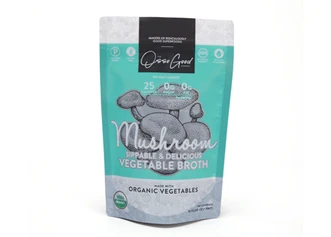
Most retort discussions start with temperature and stop there. In practice, wet pet food brings four stresses that a soup or a ready meal does not.
The first is load. A 400 g pouch of chunks in gravy weighs more than a ready-meal pouch of the same footprint, and the mass hangs on the seals while the pouch is hot and soft. Seal creep under that load is the most common field failure we see on pet food lines.
The second is free fat. Gravy carries oil to the seal area during filling and again during the retort cycle, and oil on a seal surface does not bond. A seal that looked continuous at 100 percent inspection can still leak at the channel where the fat sat.
The third is hard geometry. Bone fragments, dried jerky pieces and extruded chunks with sharp edges puncture the inner sealant or bruise the foil at the corner radius. A pouch that passes a burst test with smooth product can fail with the same product once a bone edge is in the fill.
The fourth is chemistry. Pet food gravies are salty and mildly acidic, and chloride plus fat plus heat is an aggressive combination for an aluminium foil layer. Foil corrosion does not announce itself at the seal; it shows up as pinholes six weeks into storage.
None of these is solved by choosing a thicker film. Each maps to a specific layer, a specific process parameter, or a specific filling decision.
A retort laminate for pet food is usually read from the outside in: print substrate, barrier, adhesive, sealant. Each layer has one job, and each fails in a different way.
The outer layer is typically PET, sometimes with a nylon layer behind it. PET takes the print, gives the pouch stiffness for standing on shelf and protects the barrier layer during handling. Where puncture resistance matters, a BOPA (cast or biaxially oriented nylon) layer sits between PET and the barrier; nylon absorbs impact that would otherwise crack a metallized or foil layer, which is why bone-heavy pet food formats often carry it.
The barrier layer is aluminium foil, metallized PET, or an EVOH-containing structure. Foil at 7 to 9 microns gives close to absolute moisture, oxygen and light protection and is the reference for long shelf life. Metallized PET costs less and is thinner, but it is a deposited layer measured in nanometres, and it cracks where the pouch flexes.
The adhesive is where retort pouches separate from ordinary laminates. Standard laminating adhesives are formulated for ambient service. Under 121°C they soften, and the bond between foil and sealant fails. A retort-grade adhesive is a different chemistry and must be specified as such, with the supplier confirming the grade against the sterilization condition. This is also why dry lamination with a heat-resistant adhesive system is the usual route for retort work rather than a general-purpose bond.
The sealant is the layer the whole design depends on. Cast polypropylene, usually written CPP or RCPP for retort cast PP, keeps its seal at sterilization temperature and does not flow under load the way a PE sealant does. Thickness commonly sits in the 60 to 100 micron range for pet food, chosen against fill weight and chunk sharpness rather than against cost alone.
| Structure | Barrier layer | Sealant | Where it fits in pet food | What to watch |
|---|---|---|---|---|
| PET / AL / RCPP | Aluminium foil 7 to 9 micron | RCPP 70 to 100 micron | Long shelf life, aroma-critical loaf and chunks in gravy | Foil corrosion from salty gravy; pinholes at fold and corner |
| PET / BOPA / AL / RCPP | Foil plus nylon | RCPP | Large packs, bone-in or sharp chunk products | Stiffness and cost; still not mono-material recyclable |
| PET / VMPET / RCPP | Metallized PET | RCPP | Cost-sensitive, medium shelf life | Flex cracking after retort and handling; light not fully blocked |
| PET / BOPA / RCPP | None | RCPP | Markets that want product visibility, shorter shelf life | No light barrier; confirm fat oxidation over the target shelf life |
| Mono-PP with EVOH | EVOH where used | RCPP | Recyclable mono-PP programmes | EVOH behaviour after retort must be validated per product |
| Foil structure with spout | Aluminium foil | RCPP plus PP fitment | Broth, gravy and liquid toppers | The spout seal becomes the critical point |
A structure table is a starting point, not an approval. The combination that works for a 100 g kitten pouch rarely transfers unchanged to a 1 kg pouch, because the load on the seal and the heat penetration path both change.
Buyers often ask whether a structure is "retortable" as if it were a property of the laminate. In practice the sealant decides whether the pouch survives, and the sealant decides the process window.
A PE sealant softens well below sterilization temperature and flows under seal pressure and product load. It can be made to work in a narrow, gentle cycle, and it is the wrong choice for a 121°C saturated steam process with overpressure. A CPP or RCPP sealant holds its shape and its bond, which is why retort work is a polypropylene conversation before it is a barrier conversation.
Three sealant properties matter more than the data sheet headline:
Hot tack, or the seal strength available while the seal is still hot. A sealant with poor hot tack needs a longer dwell and a cooler fill to survive the moment it leaves the sealing jaw.
Contamination tolerance, meaning how much fat or product residue the seal can tolerate before it channels. Pet food gravies are the hardest test of this property, and no sealant tolerates a wet seal indefinitely.
Seal window, the range of temperature, pressure and dwell that produces a sound seal. A narrow window is not fatal, but it removes tolerance from a line that already has variation in fill weight and jaw condition.
The practical consequence: seal parameters agreed on a lab sealer rarely transfer directly to a production line. They should be set on the production machine, then re-verified on pouches that have been through the full retort cycle, not on as-produced samples.
A sealed pouch with almost no headspace still contains some gas, and heating expands it. Without counter-pressure the pouch balloons, the seal is stressed from inside, and a weak seam opens. Retort systems therefore apply overpressure, using saturated steam, water immersion, water spray or a steam-air mixture, and the pressure profile has to rise with the temperature and come down slowly at the end of the cycle.
The pressure drop is where many first trials fail. A fast blow-down creates a pressure differential across the seal in the wrong direction, and pouches that survived the hold come out with distorted seals or open seams. A controlled ramp-down costs cycle time and saves the batch.
Heat penetration is the second half of the problem. Retort is a conduction-dominated process in a pouch, and the cold point sits where the product is thickest and the convection is weakest. Chunky pet food in a thick gravy heats more slowly than a liquid, and a pouch that is too thick or too tightly packed will not reach the target in the centre without overcooking the edges. This is why retort pouch formats tend to stay relatively flat, and why the fill weight, chunk size and gravy viscosity belong in the process validation rather than in a marketing brief.
Sterility is expressed as an accumulated lethality, usually F0 referenced to 121.1°C. Low-acid products conventionally target an F0 of at least 3 minutes for Clostridium botulinum control, and many pet food processes run higher to reach the texture they want. The number is not a purchasing decision: it has to be established by a qualified process authority with heat penetration studies on the actual product in the actual pouch, and it is the reason a new pouch size or a new recipe triggers a new validation rather than an assumption.
One more cycle detail matters for pet food specifically. Retort pouches for wet pet food are often processed in water immersion or spray systems to get better heat transfer around the pack, and the water has to stay clean. Fat and gravy that leak from a damaged pouch contaminate the retort water and then deposit on the next batch, which is a quality problem that looks like a sealant problem.
The retort can only protect what the filler gives it. Three filling decisions decide whether a good structure performs.
Headspace should be as small as the filling system allows, and the residual gas should be controlled by steam flush, vacuum or a hot fill rather than by hoping. Air in the pouch expands in the retort, stresses the seal and oxidises the fat in the product. A pouch with a large air pocket can pass every film test and still deliver rancid product.
The seal area has to be dry and clean. Product splashed into the seal zone during filling becomes a permanent channel once the jaw closes over it. Anti-splash filling nozzles, a fill level that leaves a clear band below the seal, and a seal band of adequate width are the three controls; a seal width of 8 mm or more is common on pet food work, and wider seals are used where fill weight and chunk size are high.
Gross fill weight should leave the pouch able to lie flat in the retort crate. Overfilled pouches stack badly, heat slowly and stress their own seals; the correct fill weight is set against the retort tray and the crate loading pattern, not only against the label claim.
Seal integrity is a system, not a step, and the methods used to prove it are worth reading alongside this section if the verification side is the current bottleneck: our seal testing method reference covers the destructive and non-destructive options in detail.
Pet food fills damage pouches in ways that a burst test on smooth product will never reveal.
Sharp fragments concentrate force at a point, and the inner sealant is the layer that gives way. A thicker RCPP sealant, a nylon layer in the laminate, and a generous corner radius all raise the puncture resistance, and the format itself can help: a flat three-side seal pouch puts less stress on a corner than a shaped pouch with tight radii.
Where the product includes bones or hard dried pieces, the fill rate and drop height into the pouch matter as much as the film. A product dropped from height onto a soft sealant can bruise the layer even when it does not pierce it, and the damage appears later as a leak after retort.
The format question is its own decision. Flat pouches suit 100 to 400 g portions and stack efficiently in a retort crate. Stand-up formats carry larger fills and shelf presence but need more careful crate loading, because the bottom gusset is a natural stress point. A spout format suits broth, gravy and liquid toppers, and it moves the critical seal to the fitment: a spout pouch is only as retortable as its fitment and its spout seal.
Testing on as-produced pouches proves the machine. Testing after the full retort cycle proves the pack. The second is the only one that predicts field behaviour.
| Test | Method | What it catches | When to run |
|---|---|---|---|
| Seal strength | ASTM F88 | Seal creep and weakened seams after heat and load | After the full cycle, on production samples |
| Unrestrained burst | ASTM F1140 | Ballooning damage and seam rupture | After the cycle, and after drop testing |
| Dye penetration | ASTM F1929 | Channel leaks from a contaminated or wrinkled seal | After the cycle |
| Vacuum decay or bubble emission | ASTM D3078 | Pinholes and foil cracks | After the cycle and after handling |
| Visual seam inspection | ASTM F1886 | Wrinkles, trapped product and seal width loss | Inline at 100 percent, plus sampling |
| Bond strength or peel test | Internal protocol | Adhesive failure at sterilization temperature | First article and per batch |
| Headspace oxygen | Oxygen analyser | Flush efficiency and oxidation risk | Per shift |
| Drop and compression | Internal protocol | Damage in distribution and pallet stacking | Per SKU qualification |
A retort seal strength target is commonly written at 35 N/25 mm or above for the bottom and side seals, higher than the 25 N/25 mm typical for ambient food pouches, and it should be measured after the cycle rather than before. Where a buyer is writing acceptance criteria into a purchase order, breaking strength, burst and dye penetration together cover most of the risk; a single test gives false confidence.
Ten items decide whether a quote is comparable and whether a delivery can be rejected. A brief that carries all ten usually removes a round of samples.
The documentation point deserves its own note. Pet food is regulated as feed in most markets rather than as food, so contact-material evidence is often reviewed under feed hygiene rules rather than food-contact rules, and the two do not ask for identical paperwork. Buyers should confirm the requirement for their own market with their regulatory adviser rather than assume a food-contact certificate covers a pet food pack.
Monomer programmes have reached wet pet food, and the honest position is that mono-PP retort structures are commercially available but application-specific.
What mono-PP buys is a structure that fits a polypropylene recycling stream, which matters in markets where design requirements or retailer commitments apply to pet packaging as well as human food. What it costs is process tolerance: the seal window is narrower than a foil laminate, the barrier ceiling is lower, and the EVOH that provides oxygen barrier has to be validated against the retort cycle and the humidity inside the pack rather than assumed from a data sheet.
The decision turns on shelf life and format, not on preference. A 12-month ambient loaf in a large pouch is a foil conversation. A shorter-shelf, higher-turn product in a mono-PP retort structure can be the better commercial and environmental answer, provided the validation is done on the real product. Our recyclable mono-material routes for pet food set out where the boundary sits, and this article deliberately does not repeat that argument.
Is a retort pouch the same as a boil-in-bag pouch?
No. A boil-in-bag pouch is heated in water outside the pack and only needs to survive around 100°C. A retort pouch is sterilized with the product sealed inside, at temperatures above 121°C with applied overpressure, so both the sealant and the adhesive have to be retort grade.
Can we use the same pouch for 100 g and 400 g fills?
Not without revalidation. The larger fill changes the load on the seal, the heat penetration path and the crate loading pattern. The structure may be identical, but the process, the fill weight and often the seal width need to be confirmed again.
Why does the pouch look fine at inspection and leak later?
Because the damage often happens during the cycle or in handling, not at sealing. A contaminated seal channels under heat, a foil cracks at a fold, and a bruised sealant fails after a few weeks under load. Only post-cycle testing catches this class of defect.
Does a foil structure remove the need for nitrogen flushing?
No. Foil stops oxygen entering through the film, but it does nothing about the oxygen already sealed inside. Headspace gas and dissolved oxygen in the product are the dominant oxidation risk in the first weeks, so flushing or vacuum remains part of the specification.
Can a spout pouch be retort processed?
Yes, when the pouch, the fitment and the spout seal are all specified for the process. The fitment is usually the limiting component, and the spout seal becomes the critical seam to test after the cycle.
What shelf life can a retort pet food pouch achieve?
It depends on the structure, the product and the storage condition, and it has to be demonstrated rather than quoted. Foil structures with a validated process are used for long ambient shelf lives; metallized and mono-PP structures carry shorter targets. The number should come from a shelf-life study on the actual pack.
The film is the easiest part of a retort pouch to get right and the least likely reason a pouch fails. The failures come from a sealant chosen for cost rather than for heat, an adhesive qualified for ambient service, a pressure ramp that is too fast, a fill that leaves air or fat in the wrong place, and a test protocol that stops at the sealing machine.
For wet pet food specifically, write the brief around the four stresses: load, free fat, sharp fragments and salty gravy. Then verify on pouches that have been through the full cycle, in the format and fill weight that will actually ship.
If the next step is a structure review rather than a quote, send the fill weight, chunk type, target shelf life, retort system, and destination market; those five inputs decide most of the answer, and our team can run the review against the formats currently in production.
Chat on WhatsApp
+1 (617) 987-7432