
 English
 Español
 Deutsch
Chat on WhatsApp
+1 (617) 987-7432
Whether you are packaging roasted coffee beans, fresh pet food, or powdered vitamin blends, the preformed pouch you select must do more than simply hold your product. It must preserve freshness, maintain potency, survive distribution, communicate brand values, and increasingly, meet stringent sustainability and regulatory requirements.
However, the technical specifications that matter vary dramatically by sector. A dry snack demands high oxygen and moisture barrier. Fresh pet food requires retort-grade durability and freeze-thaw resistance. A nutritional supplement needs precisely controlled water vapor transmission to prevent clumping and potency loss.
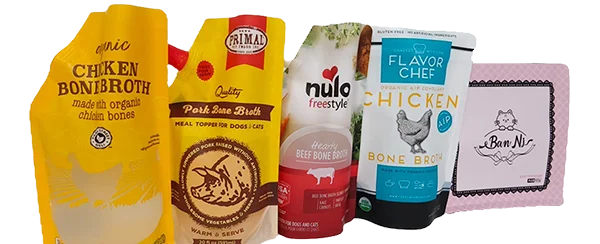
This guide examines the distinct technical requirements for preformed pouches across three high-demand sectors — human food, pet food and snacks, and nutritional supplements — providing a practical decision framework based on packaging science and industry standards.
The global flexible packaging market has continued its steady expansion. According to Mordor Intelligence, the flexible packaging market was valued at USD 336.87 billion in 2025 and is forecast to reach USD 432.74 billion by 2031, registering a CAGR of 4.26% over 2026–2031. Rising sustainability mandates, rapid e‑commerce expansion, and brand demand for lightweight, high‑barrier formats are widening the flexible packaging industry opportunity.
MarketsandMarkets similarly reported that the flexible packaging market was valued at USD 301.2 billion in 2025 and is projected to reach USD 369.6 billion by 2030, growing at a CAGR of 4.2%. Growth is driven mainly by increasing demand from food and beverages, pharmaceuticals, and personal care.
Within the preformed pouch segment, stand‑up pouches represent one of the most widely adopted formats. Fortune Business Insights reports that the global stand‑up pouches market was valued at USD 36.77 billion in 2025 and is projected to reach USD 76.76 billion by 2034, registering a CAGR of 8.68%. Their lightweight structure, recyclability, lower transportation costs, and reduced carbon footprint have made stand‑up pouches increasingly popular.
For a comprehensive overview of available pouch formats — from stand‑up and flat‑bottom to spout and side gusset — the preformed pouches collection provides a visual reference of the options discussed throughout this guide.
For human food applications — ranging from dry snacks and baked goods to coffee, tea, and ready‑to‑eat meals — the single most critical preformed pouch specification is barrier performance. Extended shelf life is widely recognized as the most impactful way packaging can reduce food waste.
Two key metrics define barrier performance:
Oxygen Transmission Rate (OTR) — measured in cc/m²/day, commonly using ASTM D3985 or ISO 15105‑1.
Water Vapor Transmission Rate (WVTR) — measured in g/m²/day, using ASTM F1249 or ISO 15106‑2.
The specific targets depend on the product. Coffee and roasted nuts, for example, require extremely low OTR to prevent rancidity of oils. According to food preservation research, the oxygen barrier rate of polyester (PET) containers can reach 0.5 cc/m²·day, and the water vapor permeability of polypropylene (PP) materials is less than 8 g/m²·day.
Beyond barrier performance, food packaging must comply with food contact material regulations. In the US, compliance is demonstrated via 21 CFR listings, Food Contact Notifications (FCNs), or Threshold of Regulation (TOR) exemptions. In the EU, Regulation (EU) No. 10/2011 governs plastic food contact materials, setting an overall migration limit (OML) of 10 mg/dm² for general use, or 60 mg/kg (ppm) for specific cases such as infant food packaging or when contact area cannot be reliably estimated
Retort pouches deserve special mention. For shelf‑stable ready‑to‑eat meals and wet pet food requiring high‑temperature sterilization, retort pouches must withstand temperatures above 121°C during processing while maintaining seal integrity. These pouches typically incorporate EVOH (ethylene‑vinyl alcohol copolymer) as a central barrier layer, providing oxygen transmission rates (OTR) in the range of 0.5–1.0 cc/m²·day under ambient conditions, combined with polypropylene as the inner heat‑seal layer and PET/nylon as the outer structural layer.
To see how barrier specifications are translated into actual pouch designs across different food applications, the food industries application page offers additional examples.
The pet food packaging landscape is undergoing significant transformation. The rise of the high‑end pet food market has put forward higher requirements for barrier, sealing, and environmental protection of packaging materials.
Fresh pet food — no longer a niche segment — is driving much of the packaging innovation. Industry experts note that fresh pet food requires fundamentally different packaging than dry kibble. Traditional polyester, polyethylene, or woven polypropylene structures designed for dry kibble may no longer be adequate for moisture‑rich, fresh formulations.
The specific requirements for fresh and wet pet food packaging include:
Higher barrier structures — lower OTR and WVTR values than those used for dry kibble
Hermetic seals — to maintain anaerobic conditions where required
Gas flushing capabilities — for modified atmosphere packaging
Retortable options — for shelf‑stable products that can be stored without refrigeration
Freeze‑thaw resistance — packaging must withstand repeated cooling, freezing, and thawing cycles
Consumer expectations are also evolving. Easy‑open and reclose mechanisms, portion control, and on‑the‑go formats are resonating strongly with today’s pet owners.
For pet food brands specifically exploring sustainable pouch options, the pet food and snack packaging guide provides additional insights on format selection and material choices.
The nutritional supplement market places unique demands on preformed pouches, driven primarily by the need to protect active ingredients from degradation. Supplement packaging must protect products from the potency‑robbing effects of moisture and oxidation.
The technical specification process begins with defining measurable acceptance criteria:
Target shelf life — e.g., 12 months at ambient storage
Active retention targets — e.g., ≥90% vitamin C potency at 6 months
Acceptable headspace O₂ and moisture ingress
Mechanical robustness requirements — for drop and stack conditions
These criteria are then converted into test metrics: OTR and WVTR targets, seal strength measured in N/15 mm, and accelerated stability thresholds.
Minimum barrier requirements for nutritional supplement packaging are stringent. Industry technical guidelines specify that laminates typically incorporate a high‑barrier layer to minimize oxygen and water vapor permeation, with common high‑barrier targets of WVTR < 1 g/m²·day under standard accelerated test conditions (38°C / 90% RH) per ASTM F1249 / ISO 15106.
| Formulation Type | Key Technical Requirement | Recommended Laminate Family |
|---|---|---|
| Hygroscopic powders | Low moisture vapor transmission | PET/AL/PE (foil) or high‑barrier transparent films |
| Oil‑based softgels | Chemical‑compatible sealants to prevent migration | PET/EVOH/PE with migration‑resistant inner sealant |
| Gummies/chewables | Anti‑stick inner layers, low water activity transfer | Surface‑treated PE or specialized release films |
| General ambient shelf life | Overall high barrier | PET/EVOH/PE or PET/AL/PE |
Regulatory compliance is equally critical. Layer‑level compliance documentation — including Declarations of Compliance and Certificates of Analysis — is increasingly required for audit readiness.
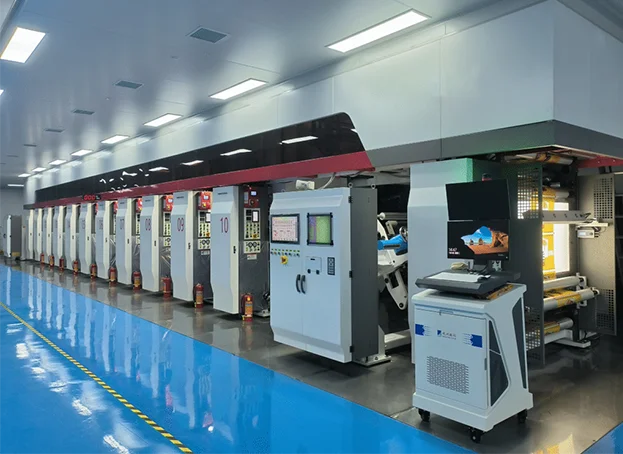
Sustainability is no longer an optional differentiator — it is becoming a regulatory and market imperative. Among the most significant technological advances are mono‑material recyclable structures (PE/PP). These are designed for compatibility with existing recycling streams, supporting circular economy goals.
Other sustainable pathways include:
Post‑consumer recycled (PCR) content — increasingly required by regulations such as the EU’s Packaging and Packaging Waste Regulation (PPWR)
PLA (polylactic acid) and paper‑based compostable packaging — suited for specific eco‑friendly scenarios, though requiring industrial composting conditions. According to European Bioplastics, packaging certified to EN 13432 is recognized as an acceptable input material to commercial composting systems.
High‑barrier recyclable solutions — innovations such as EVOH‑containing mono‑material retort pouches.
For a deeper look at available sustainable options — from PE/PP mono‑material and PCR‑based films to PLA/paper‑based compostable solutions — the sustainable packaging solutions page outlines how different pathways serve different environmental goals.
Once you have identified your sector‑specific requirements, translating them into clear supplier specifications is the next step.
| Category | Specifications to Define | Why It Matters |
|---|---|---|
| Pouch Format | Stand‑up, flat‑bottom, spout, side gusset, back‑central sealing, shaped | Determines filling line compatibility, shelf display, consumer convenience |
| Barrier Performance | OTR, WVTR targets per ASTM/ISO standards | Directly impacts shelf life, freshness, and potency preservation |
| Material Structure | Layer composition, thickness, and sealant type | Affects barrier, sealing reliability, and recyclability pathways |
| Functional Features | Zipper specifications, spout geometry, and degassing valve | Drives consumer usability and production line efficiency |
| Compliance Documentation | FDA 21 CFR / EU 10/2011 conformance, migration testing | Essential for regulatory clearance and market access |
| Testing Protocol | Pilot run on actual filler, seal peel tests, burst tests, leak tests | Verifies pouch performance before full production commitment |
A key final step before committing to full production is to run a pilot on your actual filling equipment — bench tests alone do not ensure production readiness.
Chat on WhatsApp
+1 (617) 987-7432