
 English
 Español
 Deutsch
Chat on WhatsApp
+1 (617) 987-7432
You have developed the perfect pet treat recipe — premium ingredients, the right texture, and a flavor that dogs and cats love. Now comes the critical question: how will you package it to keep it fresh?
Pet treats are particularly vulnerable to spoilage. The fats and oils in treats can oxidize when exposed to oxygen, leading to rancidity and off-flavors. Moisture can cause treats to become stale, soft, or moldy. And once a bag is opened, the clock starts ticking — unless the packaging can be securely reclosed.
Stand-up pouches with resealable features have emerged as the dominant packaging format in the premium pet treat segment. To explore the full range of available pouch styles, review WIZ Packaging's preformed pouch collection. This guide explains what makes stand-up pouches effective for pet treat freshness, what resealable options are available, and how to choose the right combination for your product.
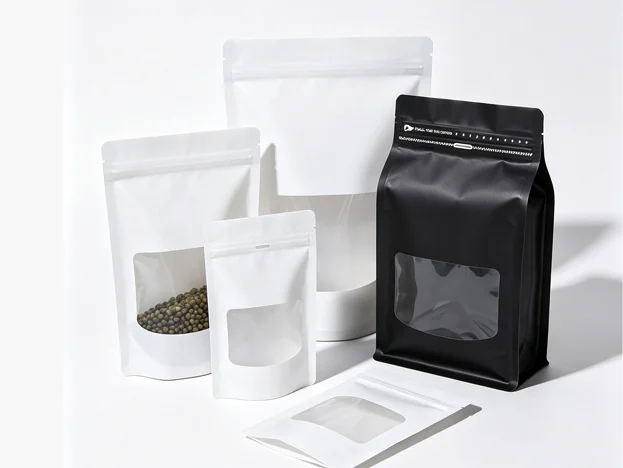
Pet treats differ from human snacks in several important ways that affect packaging requirements.
Fat content and oxidation risk. Many pet treats contain significant amounts of animal fats or oils. When exposed to oxygen, these fats oxidize — a process that creates off-flavors, odors, and potentially harmful compounds. The packaging must provide an effective oxygen barrier to slow this process.
Moisture sensitivity. Crunchy treats can become stale and soft when exposed to humidity. Soft and chewy treats can dry out or develop mold if moisture levels are not properly controlled. A strong moisture barrier is essential.
Multiple feeding occasions. Pet owners typically open a bag of treats, take out a few, and close it again — often multiple times per day. Unlike a bag of chips that might be consumed in one sitting, a bag of pet treats needs to maintain freshness through dozens of openings over weeks or months.
Shelf presence. Pet treat packaging sits on retail shelves alongside competing brands. The packaging must attract attention, communicate quality, and build brand trust through both visual appeal and functional performance.
According to industry research by Mordor Intelligence, the global pet food packaging market was valued at approximately USD 13.67 billion in 2025 and is projected to reach USD 18.64 billion by 2030, growing at a compound annual growth rate of 6.4%. Mordor Intelligence, Pet Food Packaging Market Report. The stand-up pouches market specifically is valued at USD 14.50 billion in 2025 and forecast to reach USD 19.06 billion by 2030, representing a 5.62% CAGR. Mordor Intelligence, Stand-Up Pouches Market Report. Within this growth, pet treat applications represent one of the fastest-growing segments.
A stand-up pouch is a flexible packaging format with a wide bottom gusset that allows the pouch to stand upright on shelves. But the real freshness protection comes from the material structure — not just the shape.
The multilayer barrier structure. Stand-up pouches typically comprise multiple layers of barrier material laminated together. Each layer serves a specific function:
| Layer Position | Common Materials | Primary Function |
|---|---|---|
| Outer layer | PET, OPP, or kraft paper | Printability, scuff resistance, structural strength |
| Middle barrier layer | Aluminum foil, EVOH, or metalized film | Oxygen, moisture, and light barrier |
| Inner sealant layer | PE or PP | Heat sealability, food contact safety |
The middle barrier layer is where freshness protection happens. Aluminum foil provides the highest level of barrier protection, almost completely blocking oxygen, moisture, and light. EVOH (ethylene vinyl alcohol) offers excellent gas barrier properties in a transparent format. Metalized films provide a cost-effective alternative with good but not maximum barrier performance. For a deeper look at available material structures and their sustainability profiles, review WIZ Packaging's materials and sustainability options.
Oxygen and moisture transmission rates. The effectiveness of a barrier is measured by Oxygen Transmission Rate (OTR) and Water Vapor Transmission Rate (WVTR). Lower numbers mean better protection. High-barrier structures with aluminum foil can achieve OTR values below 0.5 cc/m²/day, significantly extending shelf life compared to standard plastic packaging. For dry pet treats, PET/PE structures may be sufficient for products that tolerate OTR up to 100 cc/m²/day.
Gas flushing for extended shelf life. Some pet treat packaging incorporates nitrogen flushing during the filling process. This technique pushes oxygen out of the pouch before sealing, replacing it with inert nitrogen gas. According to packaging equipment manufacturer Mespack, a basic gas flush system can reduce residual oxygen to 7-10%, with more advanced systems achieving 1.5-3% residual oxygen. Mespack, Gas Flush Systems Technical Documentation. By reducing residual oxygen, nitrogen flushing significantly slows oxidation and extends shelf life. This is particularly valuable for premium treats with high oil content or extended distribution channels.
The resealable closure is what transforms a stand-up pouch from a single-use package into a multi-use freshness system. Several closure types are available, each with different characteristics.
Press-to-close zippers. The most common resealable option for pet treat pouches. The zipper consists of interlocking male and female profiles that snap together when pressed. These zippers are reliable, cost-effective, and easy for consumers to use. High-quality zippers can withstand approximately 10,000 openings and closings.
Slider zippers. A slider mechanism runs along the zipper track, making it easier to open and close — particularly beneficial for consumers with arthritis or reduced hand strength. Slider zippers tend to cost more than press-to-close options but offer a premium user experience.
Zipper with wiper or shield. For powdery treats or products that tend to leave residue, zippers with integrated wipers or shields help keep the sealing area clean, preventing contamination that could compromise the closure.
Flat bottom pouches with side zippers. A high-end option that combines the upright stability of a box with the flexibility of a pouch. The side zipper placement allows for a wide opening and easy access to contents.
Aroma-lock technology. Some closures incorporate aroma-lock features that not only seal out oxygen but also contain product aroma, keeping treats smelling fresh and appetizing.
| Closure Type | Best For | Key Advantage | Consideration |
|---|---|---|---|
| Press-to-close zipper | Most pet treats | Cost-effective, reliable | May trap powder |
| Slider zipper | Premium products, older consumers | Easy to use | Higher cost |
| Zipper with wiper | Powdery treats | Keeps seal area clean | Slightly more complex |
| Side zipper (flat bottom) | Larger volumes, premium shelf display | Wide opening, stability | Higher material usage |
To explore how these resealable options can be integrated into your specific pouch design — including zipper placement, material compatibility, and custom closure configurations — review WIZ Packaging's preformed pouch capabilities.
The material structure of a stand-up pouch directly affects both freshness protection and environmental impact. Here are the most common options for pet treat packaging.
PET/AL/PE (aluminum foil structure). A high-barrier structure with aluminum foil as the middle layer. Provides maximum protection against oxygen, moisture, and light. Ideal for premium treats with long shelf-life requirements. However, aluminum foil structures are not recyclable in most curbside systems and have higher material costs.
PET/VMPET/PE (metalized structure). Uses a metalized polyester layer instead of solid aluminum foil. Offers good barrier performance at a lower cost than aluminum foil. The metalized layer provides some light protection and a reflective aesthetic. More flexible than foil structures but with slightly lower barrier performance.
PE/PE or mono-material PE. A fully polyethylene structure designed for recyclability. These pouches support extended shelf life and are compatible with reclose zipper applications. Consumer demand is driving a shift toward recyclable packaging, with many brands exploring mono-material structures to improve end-of-life recyclability.
Kraft paper with PE liner. A natural, matte aesthetic that appeals to eco-conscious consumers. The kraft outer layer provides a premium, artisanal look while the PE liner offers moisture protection. Barrier performance is lower than foil or metalized structures, making this option best for short shelf-life products or products that move quickly through retail.
| Material Structure | Barrier Level | Recyclability | Best For |
|---|---|---|---|
| PET/AL/PE | Maximum | Low (foil not recyclable) | Premium, long shelf-life |
| PET/VMPET/PE | High | Limited | Mid-tier, good barrier |
| Mono-material PE | Good | High (Store Drop-off) | Sustainable brands |
| Kraft/PE | Moderate | Limited | Artisanal, short shelf-life |
Beyond resealability and barrier protection, several additional features can improve the consumer experience and retail performance of pet treat pouches.
Stand-up bottom gusset. The defining feature of a stand-up pouch. The wide base allows the pouch to stand upright on shelves without collapsing, creating a billboard effect for brand messaging.
Clear window. A transparent window lets consumers see the treats inside before purchasing. This feature builds trust by allowing visual confirmation of product quality.
Easy-tear notches. A small notch in the seal area makes the pouch easy to open without scissors. This simple feature significantly improves the user experience, particularly for consumers opening packages on the go.
Tear notch with controlled pour. Some pouches are designed so that opening just a corner area creates a pour spout for controlled dispensing. This is especially useful for small treats that need to be portioned out.
Handle. A carry handle makes larger pouches easier to transport and store. This feature is increasingly common for bulk-size pet treat packages.
Flat bottom (block-bottom) design. Provides superior stability and offers five printable surfaces for maximum branding space. Flat bottom pouches are often preferred for weights over 2 lbs because they stack well on pallets and shelves. To understand how different pouch styles and features can be combined for your specific application, explore WIZ Packaging's Pre-formed Pouch custom capabilities.
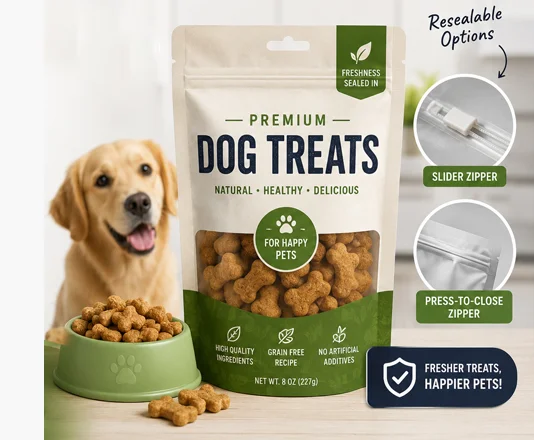
A small-batch bakery produces artisanal dog biscuits with a 6-month shelf life. The treats are relatively dry and not highly oily. The brand wants a premium look with sustainability appeal.
Recommendation: Mono-material PE stand-up pouch with press-to-close zipper and clear window. The PE structure supports recyclability claims, the window showcases the product, and the zipper keeps treats fresh between uses. For brands focused on sustainable packaging, review WIZ Packaging's materials and sustainability options. Digital printing allows for small-batch flexibility and frequent design updates. To compare printing methods for your specific needs, review WIZ Packaging's printing technology options.
Freeze-dried treats contain significant amounts of animal fat that can oxidize quickly. The product has a 12-18 month shelf-life target and is sold through specialty retail and e-commerce channels.
Recommendation: PET/AL/PE stand-up pouch with slider zipper and nitrogen flushing. The aluminum foil barrier provides maximum oxygen and moisture protection. The slider zipper offers premium user experience. Nitrogen flushing extends shelf life by reducing residual oxygen at the time of sealing.
A growing brand offers a wide variety of treats in different shapes, sizes, and formulations. They need flexible packaging that can handle frequent design changes and small batch sizes.
Recommendation: PET/VMPET/PE stand-up pouch with press-to-close zipper. The metalized structure provides good barrier at a moderate cost. Digital printing allows for cost-effective short runs and quick design changes between SKUs. The press-to-close zipper is reliable and cost-efficient for medium-volume production.
Before finalizing your pet treat packaging, work through this checklist with your supplier:
1. Know your product's shelf-life requirements. How long does the product need to stay fresh? Six months? Twelve months? Twenty-four months? Higher barrier structures cost more but may be necessary for longer shelf lives.
2. Understand your product's fat and moisture profile. High-fat treats require stronger oxygen barriers. Moisture-sensitive products need low WVTR films. If you're unsure, have your product tested for oxygen and moisture sensitivity.
3. Choose the right closure type. Press-to-close zipper for most applications. Slider zipper for premium positioning or elderly consumers. Zipper with wiper for powdery treats.
4. Consider gas flushing. If your product has a long shelf-life requirement or high oil content, nitrogen flushing can significantly extend freshness.
5. Select the material structure. Aluminum foil for maximum barrier. Metalized for good barrier at lower cost. Mono-material PE for recyclability. Match the structure to your shelf-life requirements and sustainability goals.
6. Add convenience features. Clear window for visibility. Easy-tear notch for opening ease. Handle for larger formats. Choose features that match your target consumer's lifestyle.
7. Test, test, test. Request samples filled with your actual product. Conduct shelf-life testing. Test zipper functionality across multiple opens and closes. Verify seal integrity under real-world conditions.
8. Approve a physical sample. Before committing to mass production, approve a sample of your actual material structure with your chosen closure and features. This is your reference for future production batches.
Once you have clarified these key factors — your product's shelf-life requirements, fat and moisture profile, target price point, and sustainability goals — comparing specific pouch specifications and requesting samples becomes the next logical step.
1. How to Choose the Right Stand Up Pouch Size: A Complete Step-by-Step Guide
2. Common Flexible Packaging Defects Buyers Should Watch Before Mass Production
Chat on WhatsApp
+1 (617) 987-7432