
 English
 Español
 Deutsch
Chat on WhatsApp
+1 (617) 987-7432
You‘ve spent weeks finalizing your packaging design. The colors are right, the typography is crisp, and the layout is perfect. Now comes the practical question: how should it actually be printed?
For custom flexible packaging — pouches, bags, and rollstock — two printing technologies dominate the conversation: gravure printing (rotogravure) and digital printing. Both can produce high-quality results, but they serve very different business needs. Choose the wrong one, and you could end up paying too much for a small run — or committing to a large volume before you’re ready.
This guide compares gravure and digital printing in practical terms: print quality, cost structure, minimum order quantities, lead times, and flexibility. We’ll walk through the key differences that matter most and help you figure out which one fits your situation — whether you’re launching a new product, scaling an existing one, or managing multiple SKUs. For an overview of all printing options available, review WIZ Packaging’s printing technology capabilities.
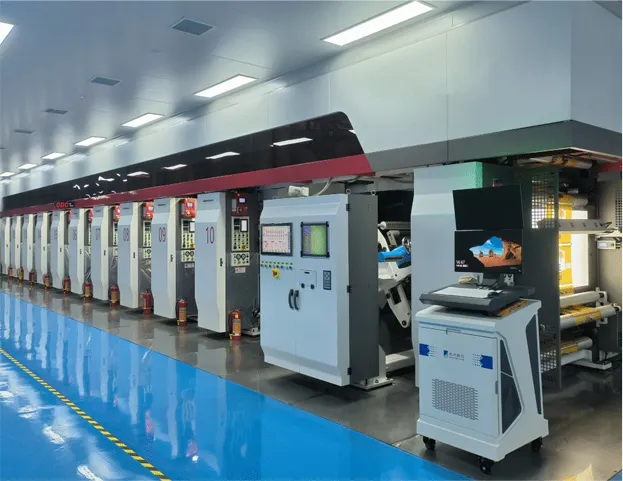
Before we dive into the comparison, let‘s clarify what each method is — in plain language, not technical jargon.
Digital printing is exactly what it sounds like: your artwork file goes straight from the computer to the printer, without any intermediate steps like plates or cylinders. Think of it like a high-quality office printer, but designed for industrial packaging films. Because there are no plates to make, digital printing offers short turnarounds, low minimum order quantities, and flexibility to change designs between batches.
Gravure printing (also called rotogravure) is a traditional method where the design is engraved onto a copper cylinder — one cylinder for each color in your artwork. The cylinder rotates through ink, and the image transfers onto the film. This process requires significant upfront investment in cylinder engraving, but once the cylinders are made, they can be reused for repeat orders.
Flexographic printing is another option, using photopolymer plates attached to printing rollers. It‘s suitable for high-volume jobs and certain substrates like PE and paper, but for this guide, we’ll focus on the gravure vs digital decision — the two most common choices for custom printed pouches.
Both methods can deliver excellent print quality. The difference is in the details.
Gravure printing has long been considered the gold standard for high-volume packaging. Its engraved cylinders deliver rich colors, precise registration, and consistent quality across the entire run. If your packaging requires photorealistic images, fine gradients, or exact color matching on challenging substrates, gravure is hard to beat.
Digital printing has made enormous strides in recent years. Modern digital presses now deliver print quality that is often indistinguishable from gravure for most commercial applications. Color consistency is high, and registration can compete with very high-quality gravure print.
The practical difference: If you‘re producing premium packaging with complex, photorealistic artwork at very high volumes, gravure’s quality advantage may matter. For the vast majority of food, coffee, pet food, and supplement brands — especially those with simpler designs or smaller runs — digital printing delivers more than enough quality. In many cases, digital print quality is now indistinguishable from gravure, especially for the color ranges and details typically used in these product categories.
This is where the two methods diverge dramatically.
Gravure‘s cost structure: High upfront investment, low per-unit cost at scale. Each printing cylinder costs money to engrave — and you need one cylinder per color in your design. For a typical 6-8 color job, that’s a significant upfront expense before a single pouch is printed. However, once the cylinders are made, the per-unit cost drops very low, making gravure highly cost-effective for large volumes.
Digital‘s cost structure: No setup costs, higher per-unit pricing. Because there are no cylinders to engrave, digital printing has zero upfront tooling fees. The per-unit cost is higher than gravure, but for small to medium quantities, the total cost is often lower because you’re not paying for cylinders.
The break-even point: There‘s a crossover point where the two methods meet in total cost. Below that quantity, digital’s lower total cost wins. Above it, the gravure‘s lower per-unit cost takes over. This crossover typically happens around 5,000 to 10,000 units per SKU per run.
The practical difference: If you’re ordering fewer than 5,000-10,000 pouches, digital printing is almost certainly more cost-effective. If you‘re ordering 50,000+ units of a stable design, you’ll reorder multiple times; gravure‘s per-unit savings will eventually pay for the cylinders.
MOQ is often the deciding factor for smaller brands and new product launches.
Gravure printing typically requires high MOQs to be economically viable. Because of the cylinder costs, printers need large orders to spread that expense. Typical gravure MOQs start at 10,000 units and can go up to 100,000+, depending on the supplier.
Digital printing has much lower MOQs — typically 500 to 5,000 units. This makes it ideal for sampling, market testing, seasonal products, and brands with multiple SKUs.
The practical difference: If you‘re a startup, launching a new product, or testing a new market, digital printing’s low MOQ reduces financial risk. You don‘t have to commit to thousands of units before you know if the product will sell. If you have an established product with stable, high-volume demand, gravure’s higher MOQ is less of a barrier.
Speed to market matters — especially for seasonal products, promotional campaigns, or tight launch deadlines.
Digital printing offers fast turnaround — typically 2-4 weeks from artwork approval to delivery. Because there are no cylinders to engrave, production can start almost immediately.
Gravure printing takes longer — typically 6-10 weeks. The cylinder engraving process alone adds significant time before printing can begin.
The practical difference: If you need packaging quickly — for a new product launch, a seasonal promotion, or to restock unexpectedly fast — digital printing‘s shorter lead time is a clear advantage. If you’re planning months ahead and volume justifies gravure, the longer lead time may be acceptable.
Brands evolve. Packaging updates happen. New flavors, new formulations, new seasonal designs.
Digital printing offers complete flexibility. To change a design, you simply send a new digital file. There are no new cylinders to engrave, no additional setup costs. This makes digital printing ideal for brands with frequent design changes, multiple SKUs, or regional variations.
Gravure printing locks you into a design. Once the cylinders are engraved, changing the artwork means engraving new cylinders — which means new upfront costs and lead time. This is why gravure is best for stable, long-term designs that won‘t change for years.
The practical difference: If you have one or two core products with designs that won’t change, gravure works well. If you have many SKUs, seasonal packaging, or frequent updates, digital printing‘s flexibility is invaluable.
Both printing technologies are adapting to meet sustainability goals, though in different ways.
Gravure and sustainability: Gravure cylinder reusability, compatibility with recyclable materials, and suitability for mono-material substrates position it as an efficient choice for packaging applications. By using fixed ink sets that remain on press between jobs, some gravure processes minimize wash-ups, shorten changeover times, and cut ink and solvent waste, reducing raw material use, solvent consumption, and VOC emissions.
Digital and sustainability: Digital printing reduces lead times and eliminates the need for costly setup processes such as plate making. It reduces material and ink waste, enables on-demand production, and eliminates obsolete packaging waste when designs change. Digital print makes it easier to experiment — you can test a new substrate or coating in a short run without the cost of retooling or new plates, helping accelerate the move toward sustainable packaging formats. To explore sustainable material options compatible with different printing methods, review WIZ Packaging’s materials and sustainability options.
| Your Situation | Recommended Method | Why |
|---|---|---|
| Launching a new product or testing a market | Digital | Low MOQ, fast turnaround, low financial risk |
| Ordering fewer than 5,000 units | Digital | No cylinder costs; more cost-effective |
| Multiple SKUs with different designs | Digital | Easy to change designs between batches |
| Need packaging in 2-4 weeks | Digital | No cylinder engraving delay |
| Seasonal or promotional packaging | Digital | Designs change frequently |
| Established product, 50,000+ units per run | Gravure | Low per-unit cost at scale |
| Stable design, reordering for years | Gravure | Cylinder cost amortized over millions of units |
| Photorealistic, ultra-premium packaging at high volume | Gravure | Superior detail and color consistency |
| High-volume packaging on challenging substrates | Gravure | Better ink laydown and registration |
A coffee roaster wants to introduce a limited-edition holiday blend. They expect to sell 3,000–5,000 bags. The design includes seasonal artwork that will change next year.
Recommendation: Digital printing. No cylinder costs, low MOQ, and fast turnaround mean the brand can get to market quickly without committing to thousands of dollars in tooling for a short-lived SKU. Next year, they can create a completely new design with no penalty.
A pet food company produces 500,000 bags per year of its top-selling recipe. The design has been stable for years.
Recommendation: Gravure printing. The upfront cylinder cost is amortized over millions of units, driving per-unit cost to its lowest possible level. Color consistency is guaranteed across every batch — critical for a brand whose packaging is recognized by consumers on the shelf.
A nutritional supplement company offers 12 flavors in the same pouch format. They update packaging regularly to reflect new formulations.
Recommendation: Digital printing. With no setup costs between designs, the brand can economically produce small batches of each SKU and make changes as needed. The flexibility to update artwork without retooling is invaluable. To see how different pouch styles and printing methods serve various product categories, explore WIZ Packaging’s preformed pouch capabilities.
Once you have a sense of which method fits your needs, here are practical questions to ask your packaging partner:
For digital printing:
What‘s your maximum color count and color gamut?
Can you match Pantone colors accurately?
What substrates are compatible with your digital press?
Do you offer any finishing options (matte, gloss, spot UV)?
For gravure printing:
How many colors can you print?
What is the cylinder life and cost for repeat orders?
What is your lead time for cylinder engraving?
Do you keep cylinders for future reorders?
For both:
Can you provide printed samples on my actual film material?
What is your quality control process for color consistency?
How do you handle color approval?
Once you have clarified these key decision factors — order volume, design stability, timeline, and budget — comparing specific printing specifications and requesting samples becomes the next logical step.
Work with your packaging partner to:
Request printed samples on your actual film material
Compare color accuracy and overall quality
Calculate the total project cost, including any setup fees
Confirm lead times against your go-to-market timeline
Verify material compatibility with your chosen printing method
Chat on WhatsApp
+1 (617) 987-7432