
 English
 Español
 Deutsch
Chat on WhatsApp
+1 (617) 987-7432
You have seen the terms: PE, PP, PCR. On packaging specifications, in supplier brochures, and increasingly in regulations and customer requirements. You know they relate to sustainability, but what do they actually mean for your packaging? And which one should you choose?
The packaging industry is undergoing a fundamental shift. Driven by regulatory mandates such as the EU's Packaging and Packaging Waste Regulation (PPWR) and growing consumer awareness, brands are being pushed to adopt more sustainable materials. However, navigating these options can be confusing. Understanding the differences between commonly used plastics and recycled materials is the first step to making a choice that is both more sustainable and fit for purpose.
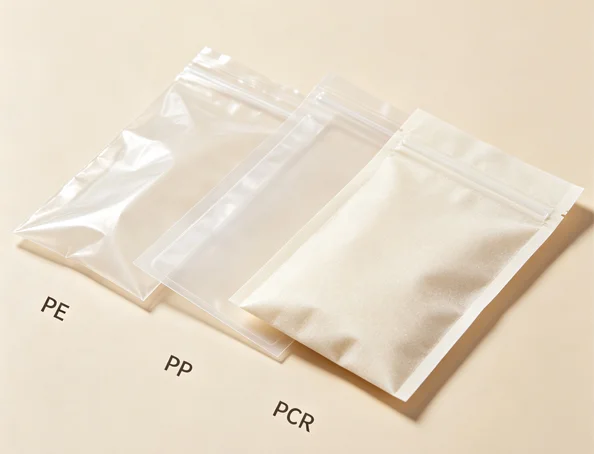
This guide explains the three key terms and helps you understand the practical trade-offs involved.
First, a quick definition of each term.
PE (Polyethylene) is the most common plastic in flexible packaging. It is the typical inner sealant layer because it seals at lower temperatures and is food-contact compliant. PE-based packaging is flexible, durable, and offers good moisture barrier properties. It is widely used for stand-up pouches, bags, and rollstock film.
PP (Polypropylene) offers better heat resistance than PE, making it essential for retort applications where packages must withstand high-temperature sterilization. PP also provides a good moisture barrier and is used in packaging for products that are filled hot. It is common in retort pouches and some snack packaging where clarity is needed.
PCR (Post-Consumer Recyclate) refers to material that has been recycled from consumer waste, such as used plastic packaging. Using PCR helps close the loop by turning waste back into new packaging. PCR can be derived from PE or PP, but sourcing food-grade material remains a significant challenge for the industry.
The shift toward more sustainable packaging often starts with material simplification. This is where PE and PP become central.
Mono-material packaging is one of the most significant current trends. Traditionally, high-performance flexible packaging was made by laminating different plastics together, such as PET, aluminum, and PE. While this structure offered excellent barrier properties, it was almost impossible to recycle, as separating the layers is difficult and costly.
Mono-material solutions (often all-PE or all-PP) use a single polymer type for the entire package. This design increases recyclability because the entire pouch can be processed in existing PE or PP recycling streams, without the need for complex separation. This approach is a core strategy for meeting PPWR targets and achieving a circular economy for packaging.
| Material | Key Characteristics | Best For | Recyclability |
|---|---|---|---|
| PE (Polyethylene) | Flexible, good moisture barrier, seals well, good for low temperatures, heat resistance up to 95°C | Stand-up pouches, flexible bags, frozen food packaging, general-purpose food packaging | Highly recyclable in PE streams as mono-material |
| PP (Polypropylene) | Rigid, excellent heat resistance (up to 130°C), good moisture barrier, good clarity | Retort pouches, hot-fill applications, some rigid containers | Highly recyclable in PP streams as mono-material |
PCR is the recycled material itself. Incorporating PCR into packaging is a direct way to show commitment to a circular economy. According to Smithers, global consumption of food-grade PCR packaging reached 1.2 million metric tons in 2024, growing at an annual rate of over 9% since 2019, driven by strong demand from food and drink brands.
However, the market faces significant challenges. A 2026 analysis by Smithers notes that year-on-year growth slowed to an estimated 3.4% in 2025 and 2.9% in 2026, as poor economics for recyclates triggered closures of recycling plants across Europe and the US. The central tension in the PCR market is pricing: recycled polymer currently costs more to produce than its virgin equivalent, partly because collection and processing infrastructure has not kept pace with demand.
The main challenges with PCR are:
Availability and Quality: Food-grade PE and PP PCR are in short supply. Feedstock from recycling streams can be inconsistent, containing a mix of colors, inks, and additives, which makes it difficult to produce consistent, high-quality resin. Demand for recycled PET (rPET) is particularly strong due to its processability and decontamination efficiency.
Cost: PCR is typically more costly than virgin plastic. As of early 2025, price spreads between recycled and virgin materials were close to their highest recorded values since 2022. This cost gap can be a barrier for brands looking to increase their PCR usage.
Regulatory Hurdles: Certified food-grade PCR, especially for PP, is produced in limited volumes, partly due to the complexity of gaining regulatory acceptance for new recycling processes across different regions.
Despite these challenges, companies are continuing to advance recycling capabilities. For instance, Amcor has developed CleanStream technology, which mechanically processes household PP waste into high-quality recycled material suitable for contact-sensitive applications.
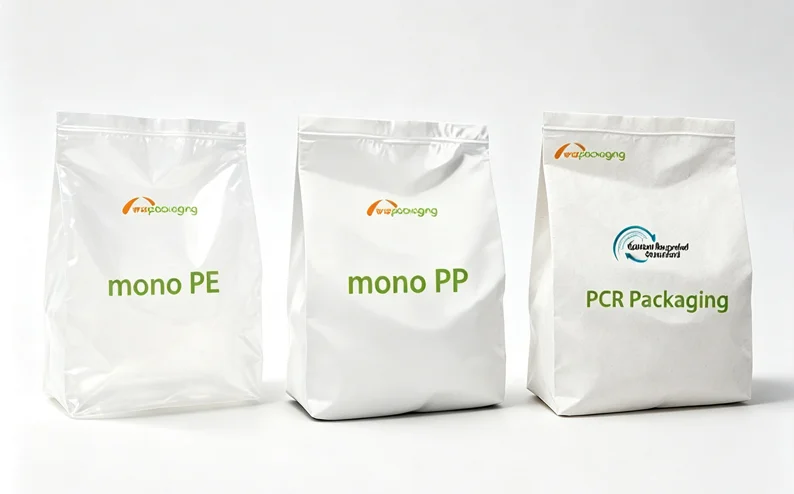
Choosing a sustainable material often involves balancing environmental goals with functional requirements. Here are some common trade-offs to consider:
Barrier Performance vs Recyclability: Traditional multi-material packaging (like PET/AL/PE) offers maximum barrier but is not recyclable. Switching to a mono-material PE or PP structure can make the packaging recyclable, but it may offer a lower barrier against oxygen and moisture, potentially reducing shelf life for sensitive products.
Cost vs Environmental Credentials: Incorporating PCR currently adds cost. You may need to decide whether a premium price for more sustainable packaging is viable for your brand and your customers.
Virgin vs Recycled Materials: Virgin resins offer consistent, predictable performance. Using high levels of PCR can introduce variability, potentially affecting the look, feel, or performance of the packaging. This is an area where close collaboration with a packaging partner is essential to ensure the end product meets your standards.
To understand how these material choices affect barrier performance and sustainability, review WIZ Packaging's materials and sustainability options.
Moving toward more sustainable packaging is a journey. Here is a practical approach to start your decision-making process:
Step 1: Define Your Sustainability Goals. What is your priority? Is it incorporating recycled content, making the packaging recyclable, or reducing material use? Your goals will guide your material choices.
Step 2: Understand the Regulatory Landscape. The EU PPWR entered into force on 11 February 2025, with general application from 12 August 2026. Understanding current and future regulations will help you make forward-looking decisions.
Step 3: Evaluate Material Options with Your Supplier. Work with your packaging partner to assess options like mono-material PE or PP, or explore the feasibility of integrating PCR into your packaging.
Step 4: Validate with Testing. Any material change must be validated with your product and filling line. Request samples for shelf-life testing and packaging line trials.
Step 5: Communicate Transparently. When you make a change, share it with your customers. Explain what you have done and why.
Once you have clarified these key decision factors — your sustainability priorities, product requirements, and regulatory considerations — comparing specific material options and requesting samples becomes the next logical step.
To explore how different pouch styles and material structures meet specific product and sustainability requirements, review WIZ Packaging's preformed pouch capabilities.
To understand how material choices affect barrier performance and sustainability, review WIZ Packaging's materials and sustainability options.
1. How to Choose Pouch Materials for Different Products
2. Common Flexible Packaging Defects Buyers Should Watch Before Mass Production
3. Seal Integrity Testing: Key Tips for Food & Pet Food Brands
4. Premium Preformed Pouches for Food, Pet Food & Nutritional Supplements
Chat on WhatsApp
+1 (617) 987-7432