
 English
 Español
 Deutsch
Chat on WhatsApp
+1 (617) 987-7432
You have a new product ready to launch — or maybe you are refreshing an existing one. You know what you want the packaging to look like. The question is: how should it be printed?
For years, brands launching custom flexible packaging had essentially one option: gravure printing, with its high upfront cylinder costs and large minimum order quantities. That meant committing to tens of thousands of units before you even knew if your product would sell.
Today, digital printing has transformed the packaging industry landscape. It enables brands to launch packaging to market in a brand-new approach—with reduced financial risks, quicker turnaround times, and scalable flexibility as their businesses expand. To learn about digital printing applications on custom preformed pouch styles, explore WIZ Packaging’s preformed pouch digital printing technology and production capabilities.
This guide explains what digital printing for flexible packaging actually means, what it can and cannot do, and how to decide whether it fits your product, your timeline, and your budget.
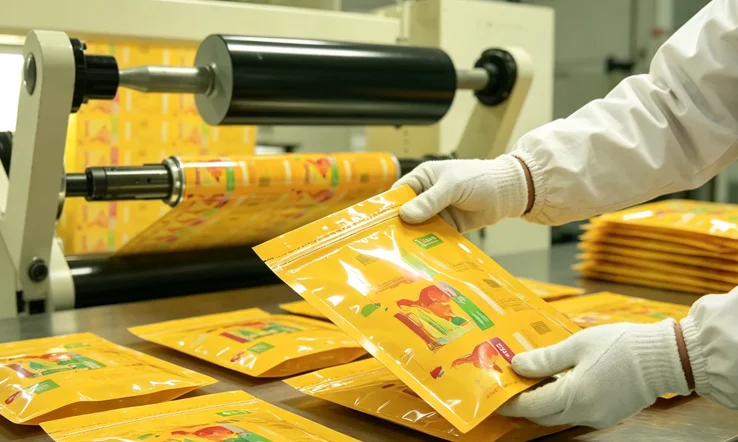
Digital printing is exactly what it sounds like: your artwork file goes straight from the computer to the printer, without the intermediate steps required by traditional printing methods.
With gravure or flexographic printing, each color in your design requires a separate engraved cylinder or printing plate — a time-consuming and expensive process. Digital printing eliminates this entirely. The printer applies ink directly onto the film according to the digital file instructions, in a single pass.
What this means in practice:
No plates, no cylinders. You are not paying for tooling before a single pouch is printed.
Design changes are simple. Want to update your packaging? Send a new file. No new cylinders to engrave, no additional setup costs.
Shorter lead times. Because there is no plate-making or cylinder engraving, production can start much faster.
According to WIZ Packaging’s printing technology overview, digital printing offers turnarounds within 7 days for finished products, low minimum order quantities, and complete flexibility in design changes — making it particularly suitable for sampling and market testing.
The numbers tell a clear story. According to Smithers, a market research firm, the global market for digitally printed packaging and labels reached USD 22.0 billion in 2025 and is projected to grow at a 10.9% compound annual growth rate to USD 36.9 billion by 2030. Within flexible packaging specifically, digital print is forecast to grow at an 11.6% CAGR over the same period. Mordor Intelligence projects the digital printing for flexible packaging market to reach USD 11.58 billion by 2031, growing at an 11.80% CAGR from 2026 to 2031.
Behind these numbers are real brand needs that digital printing addresses.
The low-MOQ advantage. Traditional gravure printing typically requires large orders to be economically viable. Digital printing changes this entirely — minimums can be significantly lower. According to drupa, the world’s leading printing technology exhibition, “short-run packaging allows brands to explore new designs and formats without significant investment,” and “small brands and start-ups can compete effectively by producing unique, eye-catching packaging that stands out on the shelf.”
Speed to market. With no cylinders to engrave, digital printing offers significantly faster turnaround times. As one converter noted, digital printing enables “faster campaign rollouts” and allows “new product launches and marketing initiatives to go from concept to shelf in record time.” Some digital printing operations can deliver completed packaging reels within 48 hours for applications such as seasonal promotions and market testing.
Flexibility and iteration. Digital printing’s lack of setup requirements makes short-run and small-batch production commercially viable. As Simon Buswell, sales and marketing director of UK-based Eco Flexibles, explained: “Digital print makes it easier to experiment. You can test a new substrate or coating in a short run without the cost of retooling or new plates.” This agility helps accelerate the industry’s move toward sustainable packaging formats.
Reduced financial risk. For startups and emerging brands, the ability to order smaller quantities means less capital tied up in inventory and less risk if a product doesn’t sell as expected.
One of the most common questions about digital printing is whether the quality matches traditional methods.
The short answer: for most commercial applications, yes.
According to ProAmpac, a major flexible packaging manufacturer, “the print quality from a digital press is excellent. Color consistency is high for digital printing compared to traditional print methods, and due to the way the inks are applied, registration can compete with very high quality rotogravure and HD flexo print.”
Modern digital presses deliver vibrant colors, sharp details, and consistent results — even at smaller volumes. Many of the same film and paper structures that are printed using flexographic or rotogravure can also be printed digitally.
The practical reality: If you are producing packaging for food, coffee, pet food, supplements, or cosmetics — and your design does not require ultra-premium photorealistic detail at massive scale — digital printing delivers more than enough quality. For most brands, the quality difference between digital and gravure is negligible in real-world retail conditions.
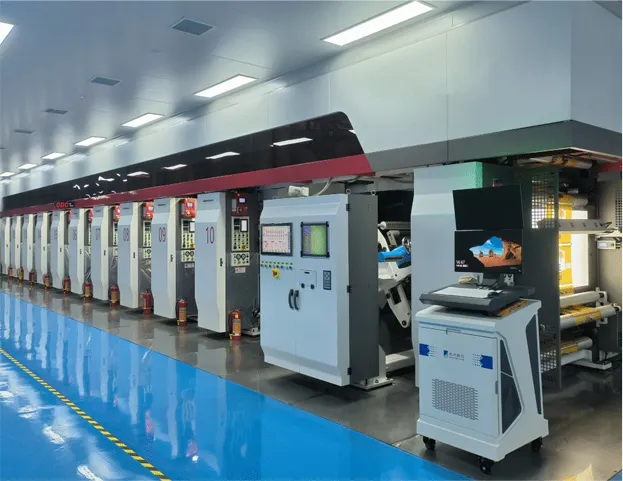
Digital printing is not the right choice for every situation. Here is a framework to help you decide.
| Your Situation | Digital Printing | Consider Gravure Instead |
|---|---|---|
| Order quantity | Smaller volumes | Large-volume, long-run production |
| Design stability | Changes frequently | Stable for years |
| Number of SKUs | Many (5, 10, 20+) | One or two |
| Timeline | Need packaging quickly | Can wait for cylinder engraving |
| Budget | Limited upfront capital | Can invest in cylinders |
| Risk tolerance | Testing new products | Established, predictable demand |
Digital printing is typically the better choice when:
You are launching a new product or testing a new market
You have multiple SKUs with different designs
You update packaging regularly (seasonal, promotional, regional)
You need packaging quickly
You want to avoid large upfront tooling costs
Gravure may still be the better choice when:
You have a stable, high-volume product with long production runs
The design will not change for years
You need the absolute highest level of photorealistic detail
You are printing on challenging substrates where gravure’s ink laydown is superior
The reality is that many brands use both — digital for short runs, test markets, and new SKUs, and gravure for their core, high-volume products once demand is proven.
Sustainability is increasingly important to brands and consumers alike. Digital printing offers several environmental advantages over traditional methods.
Reduced waste. Digital printing eliminates printing plates and makeready waste. As industry observers note, “digital printing reduces waste by eliminating plates and makeready,” and its “ability to switch between SKUs on the fly means fewer overruns and better inventory control.”
On-demand production. Digital printing enables brands to produce only what they need, when they need it. This helps reduce obsolete packaging waste when designs change. With regulations like the EU’s Packaging and Packaging Waste Regulation (PPWR) tightening, the ability to minimize overproduction becomes increasingly valuable.
Enabling sustainable material innovation. Digital printing is increasingly being integrated into broader packaging sustainability strategies — “not only through shorter print runs and reduced waste, but also by enabling simplified material structures.” As Eco Flexibles’ Buswell explains, digital printing’s agility “helps accelerate the industry’s move toward sustainable packaging formats that meet performance and regulatory requirements.”
The practical reality: If sustainability is a priority for your brand, digital printing aligns well with goals of waste reduction, inventory efficiency, and material innovation.
As a one-stop flexible packaging manufacturer, WIZ Packaging offers multiple printing technologies to match different product requirements — all under one roof.
Digital printing is ideal for brands needing short turnarounds (within 7 days), low minimum order quantities, and maximum design flexibility. It is particularly well-suited for sampling, market testing, and products with frequently changing designs.
Flexographic printing is recommended for high-volume jobs on substrates that require low tension, such as PE and paper. It offers cost-effectiveness at scale, supports up to 10 colors, and can run at speeds up to 400 meters per minute.
Rotogravure printing is the choice for large production runs with high requirements for sharp, bright, and high-resolution images. Gravure cylinders have a lifespan of up to 24 months, support up to 10 colors, and offer both surface and reverse printing options with speeds up to 350 meters per minute.
For brands producing custom printed pouches, the right printing technology depends on order volume, design stability, substrate type, and quality expectations. WIZ Packaging’s in-house capabilities across all three technologies mean clients can receive objective recommendations based on their specific project needs — whether that means starting with digital for a market test and transitioning to gravure for full-scale production, or using digital printing alongside gravure for specific finishing effects.
If you are considering digital printing for your packaging, here are practical questions to ask potential partners:
About capabilities:
What is your maximum color count and color gamut?
Can you match Pantone colors accurately?
What substrates are compatible with your digital press?
Do you offer finishing options (matte, gloss, spot UV)?
About quality control:
How do you ensure color consistency across the run?
Can you provide printed samples on my actual film material?
What is your color approval process?
About production:
What is your typical lead time from artwork approval to delivery?
What is your minimum order quantity?
Do you offer additional services like pouch making, slitting, or lamination?
About experience:
What industries do you primarily serve?
Can you share examples of similar projects?
Once you have clarified these key factors — your order quantity, design stability, timeline, budget, and sustainability goals — comparing specific printing options and requesting samples becomes the next logical step.
Digital printing is not a replacement for gravure in every situation. It is a different tool for different needs. For brands launching new products, managing multiple SKUs, or needing fast turnaround, it offers a level of flexibility and financial accessibility that traditional printing cannot match. For established, high-volume products with stable designs, gravure may still be the more cost-effective choice.
The key is understanding which tool fits your specific situation — and working with a packaging partner who can help you make that decision.
1. Gravure vs Digital Printing: Which One Delivers Better Quality for Your Product?
2. Why Colors Change When Switching Packaging Materials & Finishes
Chat on WhatsApp
+1 (617) 987-7432