
 English
 Español
 Deutsch
Chat on WhatsApp
+1 (617) 987-7432
You have selected the right material structure, approved the artwork, and signed off on the sample. The pouches look great. Then, three months into production, complaints start coming in. Customers report stale product. Retailers find leaking pouches on shelves. Your quality team discovers that seals are failing — and the problem traces back to the very first production run.
Seal failure is not a minor issue. According to statistics from the Flexible Packaging Association (FPA), seal failure is the leading cause of quality complaints regarding flexible food packaging, accounting for 32% of all reported cases. A seal defect that reaches consumers can trigger recalls, retailer chargebacks, lost shelf placement, and reputation damage that takes years to rebuild.
This guide explains what seal integrity testing is, why it matters for food and pet food brands, and how to implement a practical testing program before mass production. For an overview of available pouch formats that require reliable seals, review WIZ Packaging's preformed pouch collection.
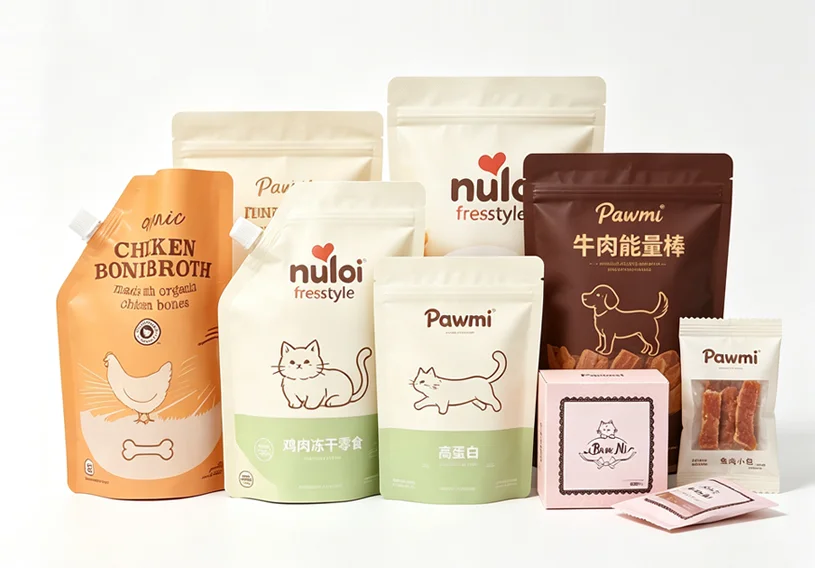
The seal area represents the most problematic part in food packaging for controlling moisture and gas ingress and preserving product quality. A good seal prevents leakage of content and its volatiles, eliminates microbial contamination risk, and minimizes changes in headspace gases and moisture content.
When seals fail, the consequences cascade:
For food brands: Oxygen and moisture enter through compromised seals, accelerating spoilage. Products arrive at retailers stale, rancid, or spoiled — well before the printed best-before date.
For pet food brands: High-fat treats can fail by oxidation and grease migration, often combined with seal contamination. Dry kibble fails by moisture pickup and odor drift. Crumbs, powders, and fat residues from treats can create micro-channels or weak seals during production.
For brand reputation: Packaging integrity plays a decisive role in maintaining product quality. Even minor packaging defects can lead to gradual degradation, increased waste, and loss of consumer trust. A seal defect that reaches consumers can trigger lost shelf placement and reputation damage that takes years to rebuild.
Seal failures typically fall into three categories:
1. Poor sealing. The layers are not properly fused. This can result from incorrect heat seal temperature, pressure, or dwell time.
2. Leakages. Small disturbances in the fused surface create channels for gas or moisture to pass through. These micro-channels are often invisible to the naked eye.
3. Contamination. Powder, grease, or product residue in the seal area prevents proper fusion. For pet food and coffee brands, this is a particularly common issue.
Visual seal defects often will be the first indication of heat sealing process variation. They also indicate a potential compromise to package integrity. However, many seal failures are not visible to the naked eye — which is why systematic testing is essential.
To understand how different pouch styles and sealing requirements vary by application, explore WIZ Packaging's Pre-formed Pouch Capability.
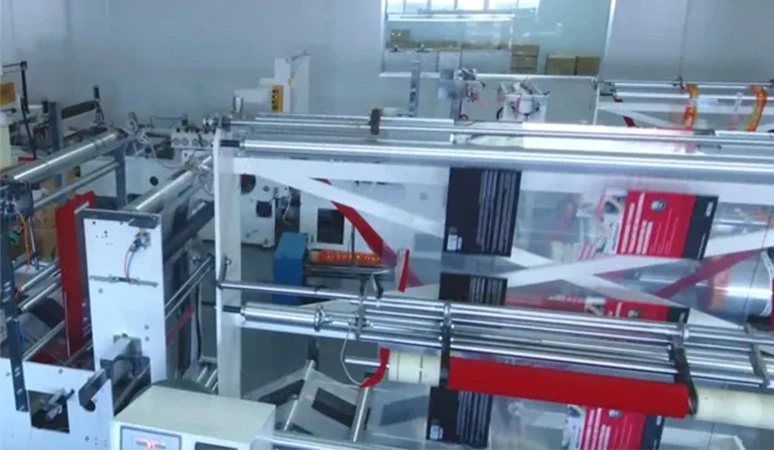
Several standardized test methods are available to verify seal integrity. Here are the most relevant ones for food and pet food brands.
A non-destructive visual evaluation of seals to detect channels down to a width of 75 μm (0.003 in.) with 60-100% probability. Visual seal characteristics and defects can provide evidence of package integrity and production sealing problems. This method is applicable to packages with at least one transparent side.
When to use it: As a first-line inspection during production. Visual inspection is quick, non-destructive, and can be performed on-line.
Limitation: The ability to visually detect channel defects depends on channel size, contrast, material type, and inspector experience. Many micro-leaks will not be detected visually.
A test method for determining gross leaks in flexible packaging containing a headspace gas by bubble emission. The package is submerged in water, vacuum is applied, and the operator observes whether bubbles are emitted. A continuous or localized stream of bubbles indicates a leak. Test sensitivity is limited to approximately 1 × 10⁻⁵ atm·cm³/s.
When to use it: For detecting gross leaks — large enough to compromise package integrity but not necessarily visible.
Limitation: Small leaks may not be detected. Viscoelastic effects or entrapped air can prevent passage through small openings.
A test method for measuring the force required to separate seals in flexible barrier materials. Seal strength is relevant not only to opening force and package integrity, but to measuring the packaging process's ability to produce consistent seals.
When to use it: For quantifying seal performance and verifying process consistency across production runs.
Methods for determining the strength and integrity of seals by applying internal air pressurization. ASTM F2054 uses restraining plates to determine minimum burst strength of a seal around the perimeter of a flexible package. ASTM F1140 evaluates the response of flexible packaging subjected to internal pressure, simulating real-world stresses such as altitude changes and internal pressure buildup.
The burst pressure indicates the highest internal air pressure that the package seal can hold before it breaks. Higher burst pressure demonstrates stronger and more reliable seals.
When to use them: For validating package performance under real-world stresses such as altitude changes, stacking pressure, and transportation vibration.
A procedure that detects and locates leaks equal to or greater than a channel formed by a 50 μm (0.002 in.) wire in the edge seals. A dye penetrant solution is applied locally to the seal edge; after contact for a specified time, the package is visually inspected for dye penetration.
When to use it: For confirming the presence of leaks when other methods are inconclusive.
| Test Method | Standard | What It Measures | Destructive? | Best For |
|---|---|---|---|---|
| Visual Inspection | ASTM F1886 | Visible seal defects (channels ≥75 μm) | No | First-line QC during production |
| Bubble Emission | ASTM D3078 | Gross leaks by bubble observation | No | Detecting larger leaks in finished pouches |
| Seal Strength | ASTM F88 | Force required to separate seal | Yes | Quantifying seal performance and consistency |
| Burst Testing | ASTM F2054/F1140 | Internal pressure resistance | Yes | Simulating transportation and handling stress |
| Dye Penetration | ASTM F1929 | Leak detection via dye migration | No | Confirming leak presence in suspect packages |
Practical recommendation: No single test covers all failure modes. A combination of visual inspection (for production monitoring), seal strength testing (for process validation), and burst or bubble testing (for finished package verification) provides the most comprehensive coverage.
A specialty coffee roaster transitions from a conventional PET/AL/PE structure to a mono-material PE pouch for recyclability. The new material has different heat seal characteristics.
Testing needed: Seal strength testing (ASTM F88) to establish new seal parameters. Bubble emission testing (ASTM D3078) to verify leak-free seals. Visual inspection (ASTM F1886) to monitor seal quality during production.
Why it matters: Coffee is sensitive to oxygen. A micro-leak in the seal can ruin an entire batch before it reaches consumers.
A pet treat manufacturer produces treats with high fat content and fine powder from coating ingredients. Powder contamination in the seal area is a recurring issue.
Testing needed: Seal strength testing on samples with and without contamination to understand the impact. Burst testing (ASTM F2054) to verify seal integrity under distribution stress.
Why it matters: For pet treats, the most frequent e-commerce complaints tied to packaging are leakers, stale product, and crushed product — often tracing back to seal weakness or seal contamination at production.
A new food brand is preparing for national retail distribution. The packaging must survive pallet stacking, transportation, and shelf storage.
Testing needed: Burst testing (ASTM F2054 or F1140) to simulate transportation and stacking stress. Visual inspection (ASTM F1886) to establish production quality baselines.
Why it matters: A seal defect that reaches consumers can trigger recalls, retailer chargebacks, and lost shelf placement.
For brands sourcing custom flexible packaging, seal integrity should not be treated as a "test and hope" exercise. The most effective approach is to build quality control into the production process itself — from specification setting through to ongoing batch monitoring.
Whether you are working with WIZ Packaging or another supplier, these principles apply to how you structure your quality program.
1. Start with a clear seal specification. Define seal strength requirements based on your product type, package weight, and distribution environment. This is not something to figure out after production starts — it should be documented before sampling begins.
For example, a heavy pet food bag with sharp kibble may require higher seal strength than a lightweight snack pouch. A product shipped by air needs seals that can withstand pressure changes. Establish these requirements in your technical specification upfront.
2. Validate seal parameters during sampling. When you receive pre-production samples, seal performance should be one of the first things you verify — not the last. Request data on seal temperature, pressure, and dwell time used to produce the samples, and confirm these settings are documented for production.
3. Test seals on filled pouches with actual product. Testing empty pouches is not enough. Product contamination — powder, grease, moisture — directly affects seal integrity. Your testing should replicate real production conditions, including the filling process.
4. Check seals at multiple positions. Seal strength can vary across a pouch — top seal, bottom seal, and side seals may perform differently depending on the sealing equipment and material characteristics. Testing only one position gives an incomplete picture.
5. Establish an ongoing monitoring protocol. Quality control should not stop after sample approval. Define how often seals will be tested during production runs and what acceptable limits look like. Visual inspections (ASTM F1886) can be performed on-line for real-time quality assurance, while periodic destructive testing provides quantitative verification.
6. Retain approved samples. Keep at least one sealed sample from each approved production run. Store it in controlled conditions as a reference for future batch comparisons. This "golden sample" becomes your baseline for ongoing quality verification.
7. Document everything. Record seal parameters, test results, and any deviations. This documentation is invaluable for troubleshooting and continuous improvement.
8. Define your response to non-conformance. Establish clear criteria for what constitutes an acceptable seal versus a reject. Define what happens when seals fall outside specification — rework, rejection, or corrective action.
From material selection through to finished pouch delivery, the quality control process includes documented seal specifications, pre-production validation, and ongoing monitoring — all supported by testing capabilities that align with ASTM standards. To understand how WIZ Packaging approaches quality management across different material structures, review the materials and sustainability packaging options.
Once you have defined your seal integrity requirements, selected appropriate test methods, and established baseline performance with pre-production samples, the next logical step is integrating these tests into your quality control workflow.
Work with your packaging partner to:
Define seal integrity specifications in your purchase agreement
Establish pre-production testing protocols for each new material structure
Implement in-process visual inspection (ASTM F1886) during production
Conduct regular seal strength testing (ASTM F88) on production samples
Perform periodic burst or leak testing (ASTM F2054, F1140, or D3078) on finished pouches
Retain approved samples for future batch comparison
1. Common Flexible Packaging Defects Buyers Should Watch Before Mass Production
2. Premium Preformed Pouches for Food, Pet Food & Nutritional Supplements
3. Stand Up Pouches for Pet Treats: Resealable Options & Freshness Protection
4. Understanding Color Deviations When Changing Packaging Stock & Surface Treatments
Chat on WhatsApp
+1 (617) 987-7432