
 English
 Español
 Deutsch
Chat on WhatsApp
+1 (617) 987-7432
You have a proven packaging design — a signature color that consumers recognize instantly. Then you decide to switch to a more sustainable material, upgrade to a premium matte finish, or move from a clear to a metalized structure. The artwork file stays the same. But when the first samples arrive, the color looks… different.
This is not a printing error. It is a predictable outcome of how light interacts with different substrates and surface treatments. When you change the material or finish, you change the canvas on which your brand colors are painted.
This article explains why colors shift when packaging materials or finishes change, what specific factors drive those shifts, and how to plan for a smooth transition without compromising brand identity.
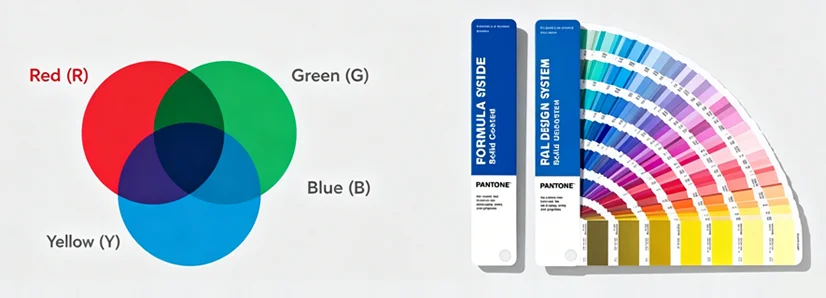
Ink does not exist in isolation. The substrate beneath it — the film, foil, or paper — determines how light passes through or reflects back to the eye. Change the substrate, and the perceived color changes.
Here is how different packaging materials affect color:
| Substrate Type | How It Affects Color | Typical Color Shift |
|---|---|---|
| White opaque film (PE, PP) | Neutral, reflective base — closest to CMYK expectations | Minimal shift; most predictable |
| Clear transparent film | Allows background (product color, light) to show through | Colors appear lighter, more translucent |
| Metalized film (VMPET) | Highly reflective with silver undertone | Warm colors (red, orange, yellow) shift brownish; lighter colors pick up a metallic cast |
| Kraft paper / recycled paper | Brown, absorbent surface | Colors appear darker, less saturated |
| Mono-material PE with PCR content | May have haze or color variation from recycled content | Inconsistent batch-to-batch; requires white underbase to mask variation |
Metalized films are particularly challenging. According to industry guidance on Pantone matching in flexo printing, metalized film introduces a highly reflective base that amplifies colour saturation but creates a metallic cast on lighter colours. A bright red that looks vibrant on white film can appear muted or brownish on metalized film.
What this means for your brand: If you are switching from a white opaque pouch to a clear, metalized, or recycled-content structure, expect color changes — sometimes dramatic ones. The same CMYK or Pantone code will produce a different visual result on each substrate.
Surface finish is one of the strongest visual modifiers of color. A glossy finish reflects more light directly back to the viewer, making colors appear brighter, more saturated, and higher in contrast. A matte finish scatters light in multiple directions, which softens colors and can make them appear slightly darker or less vibrant.
The same Pantone color printed on a glossy film and a matte film will look like two different colors.
| Finish | Effect on Color | Brand Perception |
|---|---|---|
| Glossy | Brighter, more saturated, higher contrast | Energetic, dynamic, premium |
| Matte | Softer, slightly darker, less reflective | Sophisticated, sincere, calm |
| Soft-touch | Diffuses light heavily; muted, flat appearance | Luxurious, tactile, exclusive |
| Spot UV / gloss局部 | Creates contrast between glossy and matte areas | Adds visual depth and emphasis |
Research suggests that glossy finishes can trigger stronger emotional responses compared to matte surfaces, making the product appear more valuable and desirable. But matte finishes score higher for perceived “sincerity”. The choice is not just aesthetic — it communicates brand values.
Critical takeaway: When switching from gloss to matte (or vice versa), you must re-approve colors on the new finish. Do not assume the Pantone code will look the same.
When printing on transparent films, a white ink underlayer is frequently required to reproduce saturated colors. The white reflects light back through the overprinted color, keeping it bright and true to the intended shade.
But when you switch substrates, the need for — and the performance of — white ink changes:
White opaque film: May not need a white underbase; the substrate itself provides the white foundation.
Clear transparent film: Requires a white underbase for saturated colors; without it, colors appear translucent and washed out.
Metalized film: Often requires a full white underbase to neutralize the silver reflective cast.
Kraft paper/recycled paper: May require higher white coverage to compensate for the brown, absorbent surface.
Compostable films: Compostability standards (ASTM D6400, EN 13432) limit white ink coating weight to ≤1% of total package weight, restricting how much white ink can be applied.
A study published in the Journal of Print and Media Technology Research (IARIGAI) found that background color, design color, and white ink coating weight all significantly influence design color deviations (measured as ΔE00). Coating weight had the most pronounced influence — meaning that even small changes in white ink application can cause noticeable color shifts.
What this means for your switch: If your new material requires a different white ink strategy — more coverage, less coverage, or a different formulation — the final color will shift. Plan for this and request proofs at the target white ink coating weight.
Flexible packaging is rarely a single layer. Most pouches go through a lamination process: printing → lamination → curing → slitting → pouch making.
During lamination, the printed film is bonded to another layer (sealant web, foil, or additional barrier film) using adhesive. This additional layer changes how light passes through and reflects back to your eye. The adhesive itself may have a slight yellow or cloudy tint; the top film may add gloss or haze.
The result: printed film before lamination can look different from the same film after lamination. This is normal — but it is a common source of confusion when brands approve a pre-lam sample and receive a post-lam production run that looks different.
When switching materials, the lamination effect may change because:
Different adhesives are used for different film combinations
Different curing conditions affect adhesive clarity
Different top films have different optical properties
Actionable advice: Always request a post-lamination sample when approving colors for a new material structure. Never approve based on pre-lam film alone.
If you are planning to switch packaging materials or finishes, follow this checklist to minimize surprises:
Identify the new substrate and finish – Be specific: clear PET/PE, metalized PET/AL/PE, matte white PE, kraft paper, etc.
Request a printed proof of the actual new material – Not a paper swatch, not a digital simulation. Print on the exact film structure.
Request post-lamination proof – Do not approve pre-lam color alone.
Compare to your current approved sample – Use standardized lighting (D65 daylight simulation) and, ideally, instrumented measurement.
Define the acceptable ΔE tolerance – Industry practice often sets ΔE ≤ 2.0 for critical brand colors. ASTM D2244 provides standardized practices for calculating color differences.
Decide: adjust the color or accept the shift? – If the shift exceeds tolerance, work with your printer to adjust ink formulation, white underbase, or coating weight.
Retain a new physical sample – Keep it as the reference for future production batches on the new material.
The key principle: do not assume. Assume the color will change, plan for it, and validate with physical samples before committing to bulk production.
A specialty coffee roaster wants to switch from a conventional white opaque PET/PE pouch to a certified home-compostable clear film. Their brand color is a deep, saturated orange.
The challenge: The clear film has no white base. Without a white underbase, the orange appears translucent and pinkish. With a white underbase, the color is closer to the original — but compostability standards limit how much white ink can be applied.
The solution: The brand requests proofs at multiple white ink coating weights, selects the highest coverage that still meets compostability certification, and approves a new physical sample. The orange is slightly less saturated than the original, but consistent and acceptable for the new sustainable line.
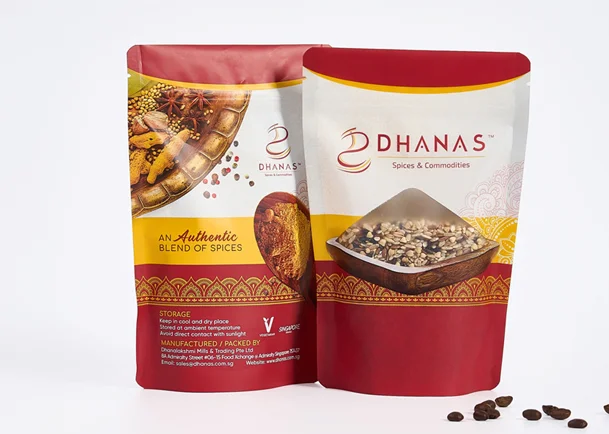
A pet food brand wants to upgrade its packaging from a standard gloss finish to a premium matte soft-touch finish. The artwork and substrate remain the same.
The challenge: The matte finish scatters light instead of reflecting it directly. The brand’s signature deep blue appears darker and less vibrant on the matte surface.
The solution: The brand works with the printer to adjust the ink formulation — increasing pigment load slightly to compensate for the light-scattering effect of the matte finish. A new physical sample is approved, and the brand communicates the change to consumers as a premium packaging upgrade.
To explore how different film structures affect both color and functional performance, review WIZ Packaging’s range of sustainable flexible packaging options.
Once you have clarified these key decision factors — your new substrate, finish, white ink requirements, and acceptable ΔE tolerance — comparing specific material specifications and requesting physical proofs becomes the next logical step.
Work with your packaging partner to establish:
A printed proof on the actual new material, post-lamination
A physical retained sample for future batch comparison
An agreed ΔE tolerance (ASTM D2244 provides standardized calculation methods)
Standardized lighting conditions (D65) for visual evaluation
For a deeper dive into color measurement and tolerance setting, see our related guide on managing color difference in custom printed pouches.
Chat on WhatsApp
+1 (617) 987-7432