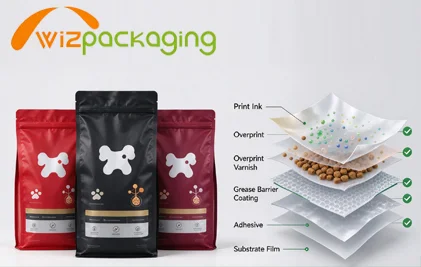
Since 12 August 2026, PFAS limits apply to the entire packaging unit—not just the film, but also inks, varnishes, coatings and adhesives. For pet food and treat pouches that need grease resistance, this is a direct compliance question.
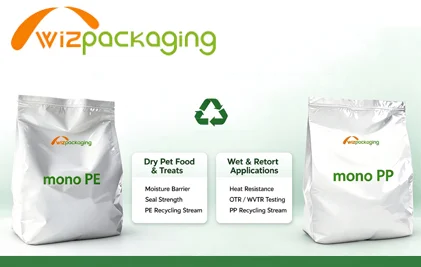
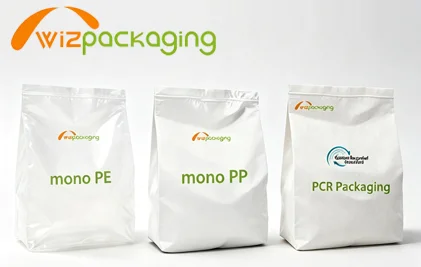
PPWR requires all packaging placed on the EU market to be recyclable by 1 January 2030. For pet food and food brands, mono PE and mono PP structures are the practical route—but only if barrier performance, seal strength, and shelf life are verified for your specific product.
Understand WVTR, OTR, light, aroma and oil barrier in flexible packaging. Learn how to specify barrier performance for pouches, coffee, pet food, frozen food and supplements.
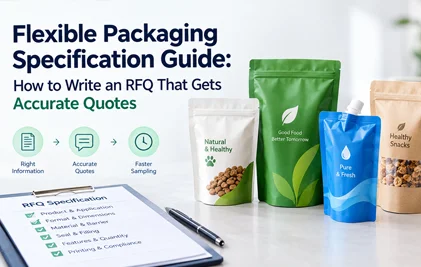
Learn the fields a flexible packaging RFQ needs—product brief, pouch format, material structure, barrier, seal, dimensions, features, printing and quantity—so suppliers can quote accurately.
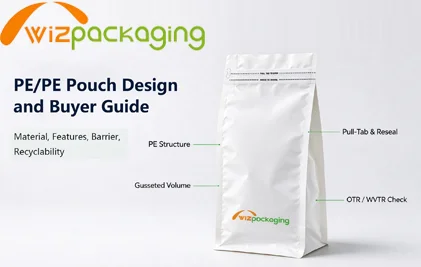
Explore a real PE/PE pouch from Wiz Packaging, with practical guidance on resealable design, material selection, barrier needs, and recycling considerations.
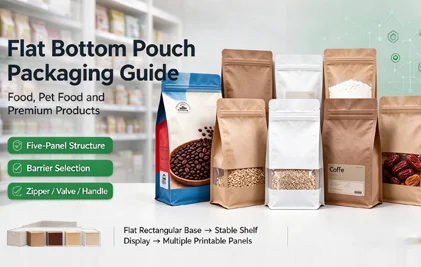
Learn how flat bottom pouches are structured, which materials and barrier options suit coffee, pet food and powders, and how to specify them for your product.
Not sure what to look for in a stand-up pouch material spec? This guide explains the 5 critical layers—outer, barrier, sealant, adhesive, and total caliper—and how each affects shelf life.
Wondering whether stand-up pouches or rollstock film generates less waste on your production line? This guide compares waste sources, material efficiency, and recyclability to help you decide.
Choosing between a premade pouch filler and a VFFS machine? This guide compares speed, cost, flexibility, and ROI to help production managers make the right call.
Understanding PE, PP, and PCR is key to making sustainable packaging decisions. This guide explains the differences, applications, and trade-offs of these materials.